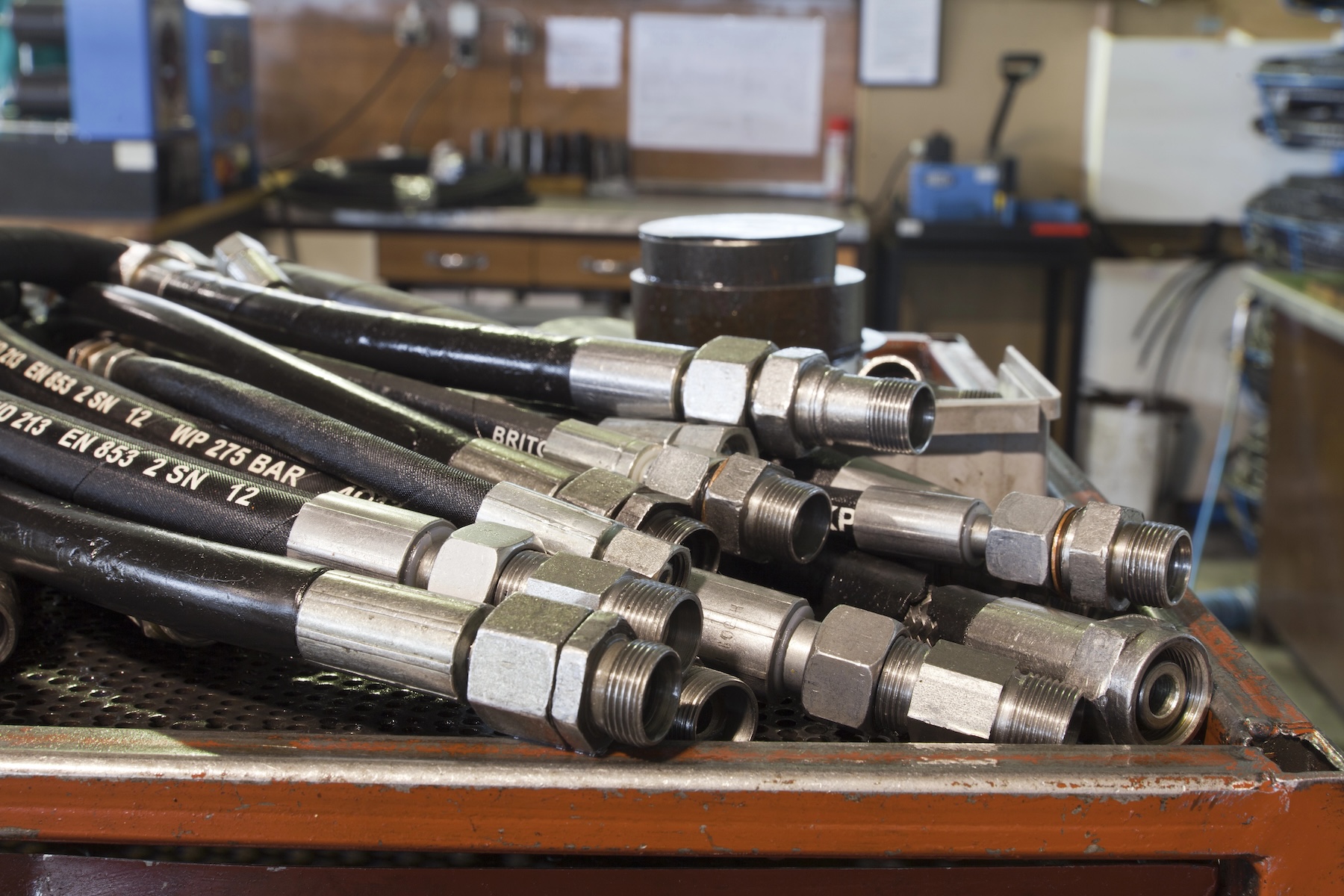
Hydraulic hose failure modes fall into a small number of categories — abrasion, incorrect assembly, hose degradation, and pressure overrun. Identifying the failure mode tells you whether the next replacement should be the same hose grade or an upgraded specification.
Industrial hydraulic hose failure modes are classified against SAE J517:2021 (hydraulic hose specifications) and ISO 18752:2019 (rubber hoses and hose assemblies, wire- or textile-reinforced, single-pressure types). Reference these standards when documenting field failures or specifying replacement hose.
Industry estimates published by Aberdeen Strategy Research place average downtime cost in critical manufacturing facilities at approximately US$260,000 per hour — confirming the economic case for preventive hose replacement on critical service. The same logic applies to industrial hoses for oil and gas service.
The sections below cover the common failure modes, the preventive controls that catch them, and the response sequence when a hose fails in service.
Identifying Common Hydraulic Hose Failures
Hydraulic hose problems often start small but can escalate quickly if left unchecked. With over five decades of field experience in Malaysia, we have observed that the same failure signatures recur across service categories.
- Abrasions and external damage: Hoses rub against rough surfaces or sharp edges during cycling. Continuous friction abrades the outer cover. Visible wear, scuff marks, or fraying on the cover usually indicates progressing damage to the reinforcement layer beneath.
- Incorrect assembly and installation: Incompatible fittings, poor routing, or operation below the SAE J517-published minimum bend radius produce localised stress. Indicators include leaking connections, visible kinks, twisted hose runs, and excessive movement under pressure cycling. Follow the manufacturer’s installation specification.
- Hose degradation: UV exposure, sustained over-temperature, or chemical attack degrade the elastomer cover and tube. Cracks, brittleness, and loss of flexibility indicate the hose can no longer support its rated operating envelope.
Preventive Measures to Avoid Failures
Most hydraulic hose failures trace back to skipped preventive controls. The four below have the highest impact on service life:
1. Specify the correct hose for the service: Match the hose construction (R1, R2, R12, etc.) to fluid type, environmental exposure, operating pressure, and temperature range. A mismatch — even a high-quality product — shortens life. Our guide to industrial hose selection walks through these trade-offs.
2. Inspect on a defined cadence: Visual inspection on a daily or weekly cadence (depending on duty cycle) catches kinking, swelling, and surface cracking before they progress to failure. Schedule replacements based on findings, not on visible rupture.
3. Replace at scheduled intervals: Do not wait for visible damage. Replace hoses at the manufacturer’s recommended interval. See our notes on when to replace a hydraulic hose.
4. Install per specification: Use only matched fittings. Avoid forced routing or pull angles. Misaligned or pre-stressed hoses fatigue early and rupture under normal cycling. Correct industrial hose clamp installation secures routing and limits vibration damage.
Small adjustments to routing or clamp positioning at installation can extend service life materially.
Steps to Take When a Hydraulic Hose Fails
When a hydraulic hose fails in service, the response sequence is safety-first:
1. Shut down immediately: Stop the machine and depressurise the hydraulic system. Failure to depressurise risks fluid injection injury, burns, or unexpected actuator motion.
2. Isolate the affected section: Apply lockout-tagout. Mark the damaged components for inspection.
3. Assess the damage: Visual inspection documents fatigue signatures, burst location, and contributing factors (abrasion at a clamp, kink at a bend, ferrule blow-off). Photograph and document the failure for root-cause analysis.
4. Replace, do not patch: Temporary patches are not safe on pressurised hydraulic service. Where the hose wall or fittings are compromised, replace the assembly. Do not reuse fittings from a failed hose.
Specifying Through a Qualified Supplier
Hose-specification support reduces guesswork on replacement parts. We supply hydraulic hoses and matched components selected for industrial service.
Specification support extends beyond catalogue selection. For a hydraulic line exposed to outdoor heat, vibration, or chemical splash, we factor those conditions into the hose, fittings, and coupling recommendation. This reduces troubleshooting on installation and improves reorder consistency on sizing, thread direction, and fitting model.
Keeping Hydraulic Systems Reliable
Hose performance is tied to overall system condition. A poorly routed hose or a mismatched fitting will halt operations regardless of hose grade. Three controls deliver most of the reliability gain:
1. Monitor: Inspect hoses on daily walk-arounds. Look for softness, stiffness, kinks, and leaks. 2. Maintain: Hold operating temperature and pressure within published limits. Maintain installation records per hose. 3. Source through specialists: Use suppliers with hose-application expertise for replacements. Rotate inventory on a first-in-first-out basis.
Documenting fitting combinations that perform well on a given service is the kind of shop-floor record that reduces failure recurrence.
Stop Hydraulic Hose Failure Before It Starts
Avoiding failure starts with classifying what causes it. Most hydraulic hose breakdowns trace back to handling errors, mismatched part selection, or warning signs missed at routine inspection.
Equipment performance improves when correctly specified components are installed per specification and inspected on a defined cadence. The result is safer operation, higher uptime, and fewer sudden hose events.
Match hoses to the service envelope, pair them with the correct fittings, and document field-failure patterns. To specify a replacement hydraulic hose against your system’s pressure, temperature, and fluid requirements, Simlecco supplies a range of constructions designed for industrial service.