- Introduction: The "Hidden" Hazard in Your P&ID
- Why Many Suppliers Fail (The Distributor Gap)
- Sign 1: The "Sponge" Test (Material Degradation)
- Sign 2: Cover Cracking & Reinforcement Exposure
- Sign 3: Fitting Slippage (The "Creep")
- Sign 4: Kinking and Deformation
- Sign 5: Hardening and Stiffness (Heat Aging)
- Critical Warning: Expanded Principal Liability
- Frequently Asked Questions (FAQ)
- 1. When should a hydraulic hose be replaced?
- 2. How do you check a hydraulic hose and when should hydraulic hoses be replaced?
- 3. What are the signs that indicate it's time to replace an industrial hose?
- 4. When is it necessary to replace an industrial hose rather than repair it?
- 5. What causes the service life of hydraulic hoses to be shortened?
- 6. What are the risks of using worn or damaged industrial hoses?
- 7. How often should industrial hoses be inspected and replaced?
- 8. When should I replace my industrial hose to ensure safety and efficiency?
- 1-Minute Decision Checklist
Knowing when to replace your industrial or hydraulic hose is the difference between planned maintenance and a catastrophic failure. In Malaysia’s tropical climate, warning signs like cover cracking, soft spots (material degradation), and fitting slippage indicate that the hydraulic system is compromised. To prevent damage and DOSH liabilities, maintenance teams must adopt a risk-based replacement schedule rather than running hydraulic hoses to destruction.
Introduction: The “Hidden” Hazard in Your P&ID
In many Shah Alam factories, the hydraulic hose is the most neglected asset until it bursts. We often see maintenance teams focused on pumps and valves, while a 5-year-old hydraulic hose quietly degrades under high pressure.
A burst hose isn’t just a mess; it’s a liability. Under the Occupational Safety and Health Act 1994, as amended in 2022, breaches of the employer’s duties under section 15 can attract penalties under section 19, including where unsafe work causes a hydraulic fluid injection injury.
Hydraulic hoses do not last forever. In Malaysia, high humidity accelerates damage to the reinforcement, while heat degrades the rubber. This guide helps you spot the specific engineering warning signs that indicate a hose has reached the end of its safe service life.
Why Many Suppliers Fail (The Distributor Gap)
Many suppliers fail because they sell hoses as “Fit and Forget” items.
They rarely explain that hydraulic hose life is finite. Common failures we see include:
- Ignoring Shelf Life: Selling hydraulic hoses that have sat in a hot warehouse for 3 years.
- Wrong Pressure Rating: Supplying a hose that cannot handle the surge pressure of the hydraulic system.
- No Tagging: Delivering hoses without installation dates, making age tracking impossible.
At Simlecco, we tag every hydraulic hose assembly. We believe you cannot manage what you do not measure.
Sign 1: The “Sponge” Test (Material Degradation)
Visual inspection isn’t enough. In Malaysia’s 90% humidity, moisture permeates the outer cover and attacks the wire reinforcement. Additionally, incompatible hydraulic fluid can attack the inner tube.
- The Test: Squeeze the hydraulic hose body (when depressurized).
- The Warning: If the hose feels unusually soft, mushy, or “spongy”, this can indicate material damage; it does not establish the condition of the inner reinforcement.
- The Action: Replace immediately. An unusually spongy hydraulic hose may be degraded and unsafe under pressure.
Sign 2: Cover Cracking & Reinforcement Exposure
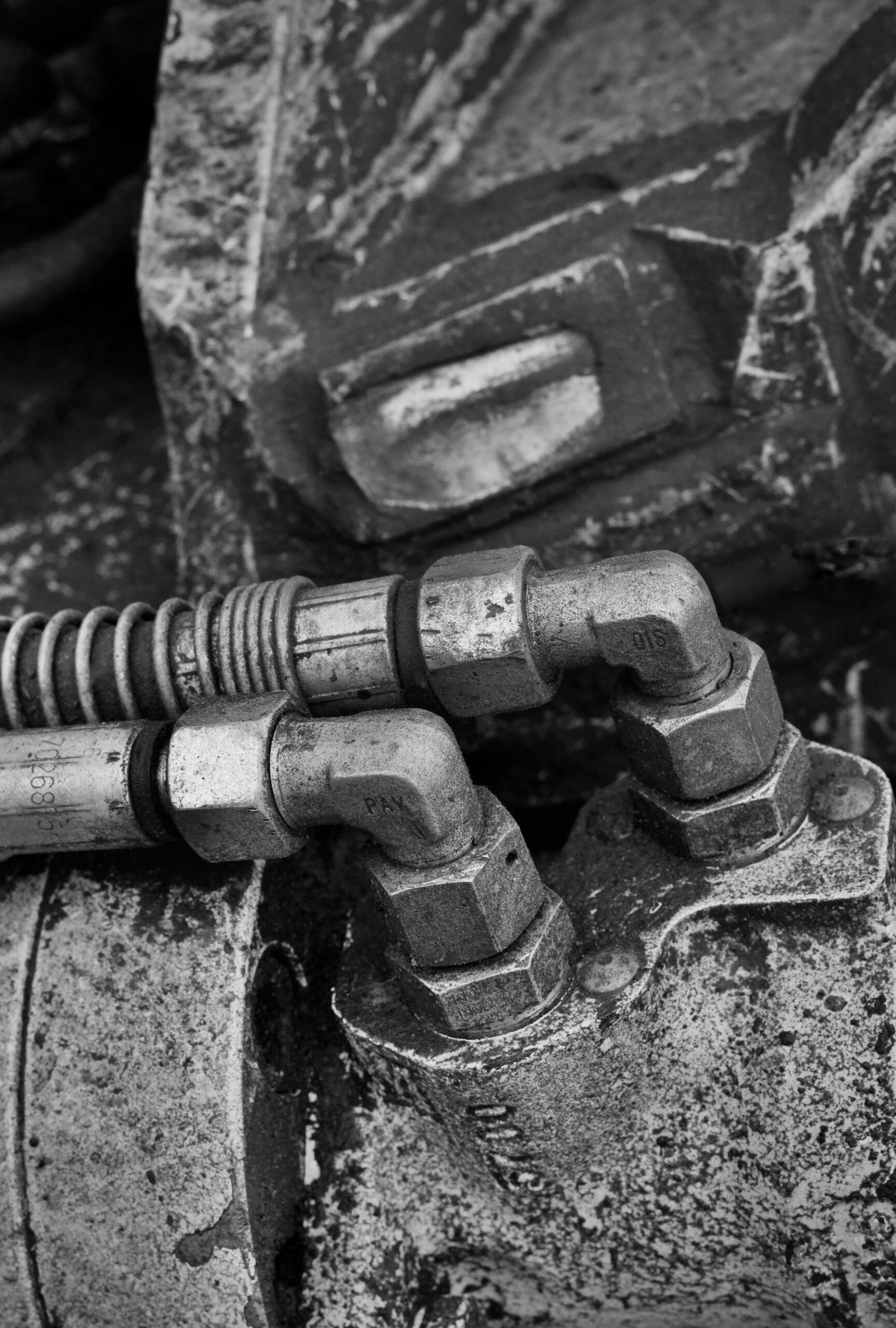
The outer cover protects the structural reinforcement (wire or braid). Once the cover suffers damage, the clock starts ticking.
- Crazing: Fine cracks on the surface caused by UV/Ozone. Monitor closely.
- Exposed Wire: If you can see the metal braid of the hydraulic hose, the assembly is dead. In a Port Klang saline environment, exposed wire will rust within days.
- The Action: If wire is visible, tag the hydraulic hose “Out of Service” immediately.
Sign 3: Fitting Slippage (The “Creep”)
Look closely at the metal ferrule (crimp) where the hydraulic hose ends.
- The Warning: If you see a gap forming between the ferrule and the hose shoulder, or if the hose looks like it is pulling out of the fitting, this is “Coupling Slippage.”
- The Cause: Often caused by pressure surges or improper crimping specs.
- The Action: Do not re-crimp. The hydraulic hose end may be damaged. Replace the assembly.
Sign 4: Kinking and Deformation
Hydraulic hoses are designed to remain round to handle pressure. Any change in shape reduces structural integrity.
- Kinking: A permanent crease in the hydraulic hose. This causes damage to the wire reinforcement grid.
- Bulging/Blistering: A bubble on the cover can indicate leaked hydraulic fluid or gas trapped under the outer skin.
- The Action: A blistered hydraulic hose is a “ticking bomb.” Depressurize and replace instantly.
Sign 5: Hardening and Stiffness (Heat Aging)
In high-temperature applications (like hydraulic systems in Pasir Gudang), elastomers harden over time.
- The Warning: If a flexible hydraulic hose becomes rigid and cracks when bent, heat ageing may have caused plasticiser loss or oxidation.
- The Risk: A rigid hose transfers vibration to the connection points, cracking pipes or loosening valves.
Critical Warning: Expanded Principal Liability
Why Inspection Records Matter: Under DOSH regulations, simply replacing a hydraulic hose isn’t enough. You should keep a log of why it failed (e.g., hose failure due to abrasion).
If a high-pressure injection accident occurs, investigators will ask: “Did you have a maintenance schedule?” Simlecco provides Hose Tagging Services to help you track installation dates, supporting your maintenance records.
Frequently Asked Questions (FAQ)
1. When should a hydraulic hose be replaced?
A hydraulic hose should be replaced immediately if it shows warning signs like exposed wire reinforcement, blistering, kinking, or fitting slippage. Even without visible damage, we recommend replacing high-pressure hydraulic hoses every 3-5 years in tropical climates due to rubber degradation.
2. How do you check a hydraulic hose and when should hydraulic hoses be replaced?
Check a hydraulic hose by visually inspecting the cover for cracks; only after isolation and depressurisation, check for unusual softness, which is a warning sign rather than a diagnosis of hydrolysis. Hydraulic hoses should be replaced when the cover is compromised, or if the hydraulic fluid has caused the inner tube to swell or harden.
3. What are the signs that indicate it’s time to replace an industrial hose?
The key signs are damage to the outer cover (exposed wire), leaks at the fitting, kinking that restricts flow, and significant hardening of the rubber. If a hydraulic hose shows any “weeping” of hydraulic fluid, it must be replaced to prevent a burst.
4. When is it necessary to replace an industrial hose rather than repair it?
You should almost always replace rather than repair high-pressure hydraulic hoses. You cannot repair a kink, blister, or mid-hose damage. Attempting to splice a damaged hydraulic hose compromises the pressure rating and is a safety violation.
5. What causes the service life of hydraulic hoses to be shortened?
Service life is shortened by excessive system pressure surges (water hammer), operating above the rated temperature, incompatible hydraulic fluid, and environmental damage (UV/Abrasion). In Malaysia, high humidity also accelerates corrosion of the wire reinforcement.
6. What are the risks of using worn or damaged industrial hoses?
Using worn hydraulic hoses poses severe risks, including catastrophic hose failure (bursting), hydraulic fluid injection injuries (which can lead to amputation), environmental contamination, and costly unplanned maintenance downtime.
7. How often should industrial hoses be inspected and replaced?
Inspection and replacement intervals for hydraulic hoses in critical safety roles should reflect the manufacturer’s recommendations, application severity, failure history and consequences of failure in the hydraulic systems concerned.
8. When should I replace my industrial hose to ensure safety and efficiency?
Replace the hose before it fails. Implementing a preventative maintenance schedule based on the manufacturer’s recommendations and local operating conditions ensures safety. Proactive replacement prevents the massive efficiency loss of an emergency shutdown.
1-Minute Decision Checklist
Before inspecting your lines, print this checklist:
Hose Health Check:
- [ ] Tactile Test: After isolation and depressurisation, is the hydraulic hose unusually soft/spongy? (Possible material degradation).
- [ ] Visual Test: Is wire reinforcement exposed? (Damage risk).
- [ ] Shape Test: Are there kinks or blisters? (Pressure failure risk).
- [ ] Fitting Test: Has the ferrule moved/slipped? (Blowout risk).
Related Simlecco guides: industrial hose selection in Malaysia, preventing corrosion in stainless steel flexible hoses, dealing with common hydraulic hose failures, preventing kinks and twists in industrial flexible hose pipes, evaluating industrial hose suppliers.