- The Three Layers of Rust and Corrosion Prevention
- Common Causes Of Rust And Corrosion In Steel Tubing
- Effective Techniques To Prevent Rust And Corrosion
- Selecting The Right Steel Tubing
- Real-World Applications and Success Stories
- Ensuring Longevity and Efficiency in Operations
- Tying the Three Layers Together
Why should you never ignore rust on your steel tubing or steel pipe? Steel tubing plays a vital role in industrial systems, from carrying fluids to supporting instrumentation setups. Visible rust or pitting on a critical fitting is the procurement signal to pause and verify the material specification. Minor spotting today warrants investigation before it develops into a bigger problem.
In Malaysia’s humid, tropical environment, protecting steel components from corrosion is a constant challenge. Without preventive care, mild steel exposed to moisture, chemicals, or outdoor air can degrade rapidly. Regular inspections and proper material selection are key to avoiding costly replacements and unplanned downtime.
The Three Layers of Rust and Corrosion Prevention
Prevention is not one action — it is three layers working together. Material choice sets the starting point. Environmental control limits the rate of attack. Inspection cadence catches the cases the first two layers do not fully prevent.
At the material layer, alloy and coating decisions compound. At the environment layer, design and storage choices compound. At the inspection layer, schedule and documentation compound.
The article below walks through each in order — pick the layer relevant to your service condition first, then add the others as the next budget cycle allows.
Common Causes Of Rust And Corrosion In Steel Tubing
Rust and corrosion do not just show up out of nowhere. They are often the result of specific conditions or practices that have been overlooked. Knowing what leads to damage can save weeks of downtime and prevent job-site risks.
Here are some of the common things that cause rust and corrosion:
- High Humidity: Malaysia’s damp atmosphere is tough on metal. When moisture lingers, especially after washdowns, it creates a perfect setting for rust on mild steel components.
- Chemical Exposure: Acid vapors and cleaning agents, if not cleaned off properly, can eat away at the protective coating. This is common in chemical and food processing plants.
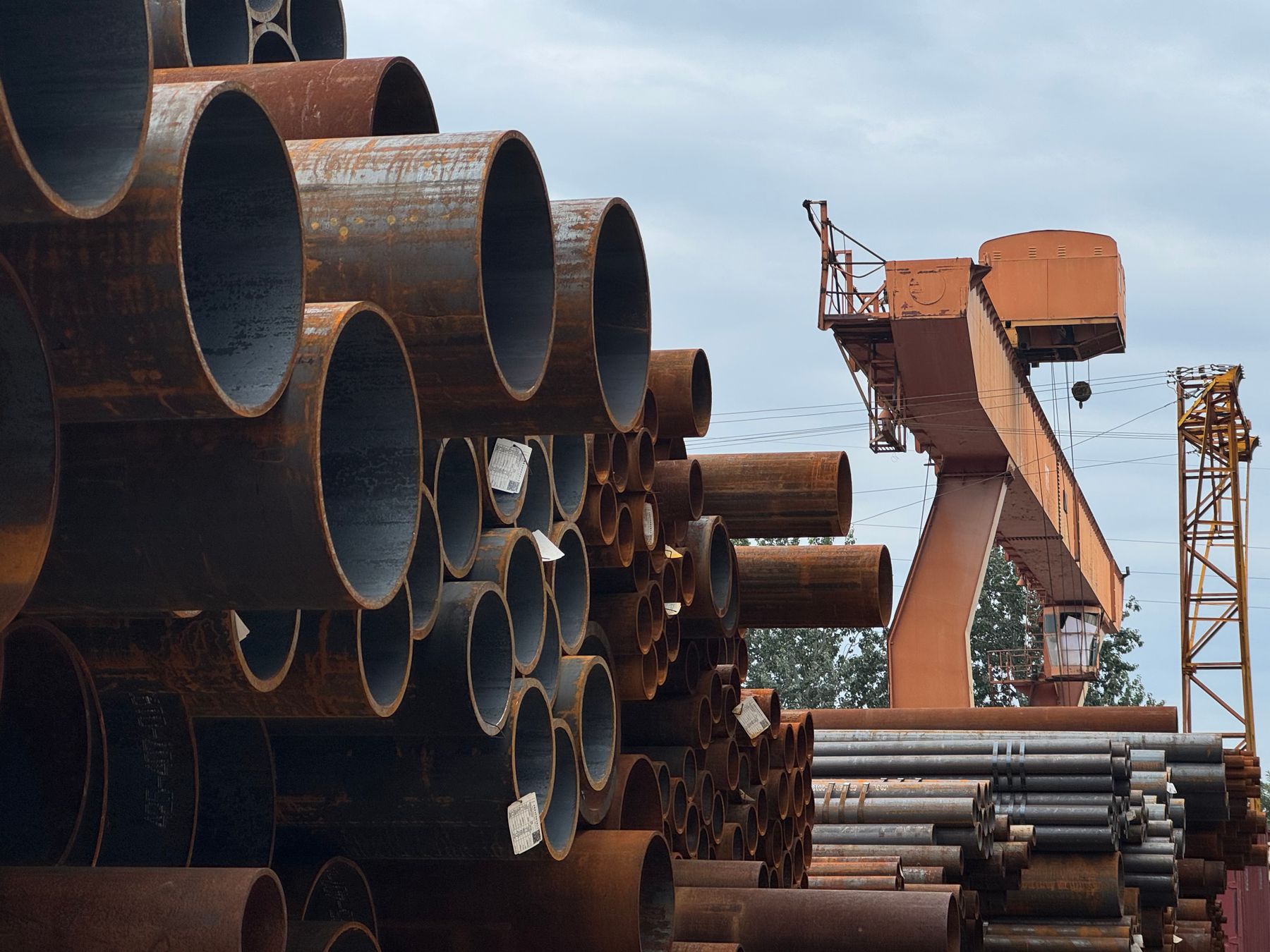
- Improper Storage: Leaving steel pipe directly on the ground or stacked where water can pool underneath is a classic example of poor handling. Without suitable storage protection, long-term damage is more likely.
- Galvanic Corrosion: This occurs when dissimilar metals (like carbon steel and copper) touch in a wet environment. This chemical reaction causes one metal, often mild steel, to rapidly corrode.
- Poor-Quality Materials: Lower-grade steel without proper surface protection will not hold up well against the humid conditions. Even stainless steel can corrode over time if exposed to chlorides or acidic environments.
Effective Techniques To Prevent Rust And Corrosion
The good news is that rust and corrosion are not unavoidable. With deliberate planning and a few straightforward practices, steel tubing and steel pipe on site or in storage can get the protection it needs to last longer.
Try these practical steps:
- Apply Protective Coatings and Treatments: Galvanized or powder-coated tubing holds up better in exposed environments. For extra protection, applying a compatible liquid anti-rust coating or spray may be appropriate, especially during long-term storage of unprotected mild steel components.
- Improve Storage Practices: Keep tubing and steel pipe off the ground using pallets or racks. Use ventilated covers to allow airflow without soaking the metal. Rotate stock to ensure older units are used first.
- Install Tubing Correctly: Avoid low points where condensation can collect. Use supports that do not trap moisture underneath the tubes. During inspections, pay special attention to joints and tube fittings where trapped moisture can start corrosion early.
- Avoid Mixing Metals: Always check compatibility before connecting steel with other materials like copper or aluminum to prevent galvanic corrosion. This is especially critical when running mild steel pipe alongside specialized stainless lines.
Good preparation makes a big difference, especially during transitions between dry and wet seasons. Applying a reliable coating is the first line of defense.
Selecting The Right Steel Tubing
Choosing the right type of instrumentation tubing is essential for maintaining corrosion resistance in Malaysia’s harsh industrial environments. Picking the correct material from the start saves both money and time in maintenance down the line.
We recommend corrosion-resistant steel grades, like stainless steel 316L or DK-Lok’s high-grade tubing, including coiled stainless steel tubing for long runs. If budget constraints require mild steel pipe, ensure it is adequately protected by a heavy-duty coating. Stainless steel 316L offers improved chloride pitting resistance over 304, but 316L still pits in stagnant seawater above approximately 25°C. For aggressive marine service — particularly Petronas Carigali offshore or coastal industrial applications — the engineered answers are higher-PREN alloys: 6Mo (UNS S31254 / 254 SMO), duplex 2205 (UNS S32205), or super-duplex 2507 (UNS S32750). 316L is appropriate for moderate-chloride process service and instrumentation tubing in protected environments.
Here are a few tips when choosing tubing and pipe:
- Check the environment where it will be used (e.g., open-air coastal site vs. air-conditioned indoor setup).
- Match the tubing to the chemicals commonly used nearby.
- Choose thickness and wall strength based on your pressure or load requirements — see our notes on steel tubing strength.
As the official DK-Lok distributor in Malaysia, we are committed to providing instrumentation tubing that meets precise chemical compatibility standards, ensuring durability against both internal fluids and external humidity.
Real-World Applications and Success Stories
In many parts of Malaysia, especially coastal or industrial zones, keeping steel tubing and steel pipe in good shape is part of daily operations. Companies that factor in corrosion control from the start usually see fewer breakdowns and smoother inspections across the year.
Maintenance teams that adopt regular cleaning and coating schedules report fewer leaks and longer service life for their tubing systems. Many also add small design improvements—such as spacers to avoid metal-to-metal contact and sloped installations for water runoff—to minimize corrosion during the rainy season. This proactive approach significantly extends the life of mild steel and protects critical fittings.
It’s not about overhauling every part in your system, but rather finding where corrosion usually starts and being one step ahead. Most problems tend to happen in the same spots—where moisture collects or where cleaning is skipped. So, keeping an eye on those and doing basic upkeep keeps things running.
Ensuring Longevity and Efficiency in Operations
Steel tubing will always face wear and tear, but proper care can slow that process significantly. When teams understand what causes rust and take steps to block it early — including correct twin-ferrule installation — they avoid bigger headaches later. Replacing tubing is not just about the cost of the part—it is the downtime, the rework, and the potential safety risks that come with it.
By using corrosion-resistant tubing, planning for better storage and installation, and staying on top of regular cleanups, companies can get better performance out of their systems. Good habits and regular checks keep tubing strong during seasonal changes and unexpected slowdowns.
For expert guidance on selecting and maintaining stainless steel instrumentation tubing and compression fittings, contact Simlecco, Malaysia’s authorized DK-Lok distributor, today.
Tying the Three Layers Together
A 316L tube on a coastal install with monthly inspection and proper passivation will outlast a 304 tube on the same install with no inspection. The compounding effect is real — and it is measurable in the DOSH Malaysia audit asset register.
For specification support choosing the right alloy and prevention plan for your service conditions, contact our technical team.