Kinks and twists in industrial flexible hose pipes reduce flow, accelerate inner-tube fatigue, and trigger downstream pressure events. The controls are specification (correct bend radius), installation discipline (no torsion at termination), and routine inspection for early signs of misuse. If you are new to the category, our primer on what a flexible hose is covers the fundamentals.
Flexibility is the reason hose is specified over rigid piping in motion, vibration, and dynamic routing applications. The same flexibility is also the failure surface when bend radius, torsion, or support guidance is skipped. A small kink becomes a pressure-loss event and then a rupture.
Minimum bend radius is a published value per SAE J517:2021 — typically 4x to 8x the hose nominal ID depending on the hose construction (R1, R2, R12, etc.). Operating below the minimum bend radius produces accelerated wire-braid fatigue and inner-tube cracking.
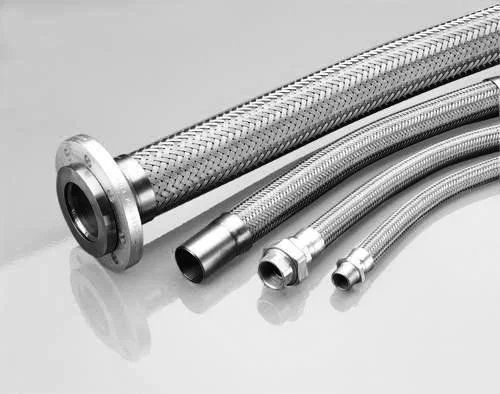
Understanding the Causes of Hose Kinking in Malaysia
Kinks and twists arise from how a hose is installed, handled, or stored. A hose bent below its minimum radius or placed under torsion loses shape and reinforcement integrity.
Hose reinforcement is engineered for axial pressure, not torsion. Once a kink or twist forms, the affected section can no longer carry rated pressure evenly.
Common failure modes observed in the field:
- Improper installation: A tight bend or stretch between connection points exceeds the rated bend radius. Specify against the SAE J517-published minimum bend radius for the hose construction.
- Incorrect routing: Hoses run across machinery edges or under sharp transitions abrade quickly and develop localised stress.
- Lack of support: Unclamped hose runs sag under their own weight, introducing twist over time.
- Wrong hose construction: A low-pressure hose installed on high-pressure service deforms under cycling pressure.
- Torsion at installation: Twisting the hose body when tightening a fitting introduces internal stress that fatigues the reinforcement.
Malaysia’s high ambient temperature, humidity, and UV exposure compound these mechanical stresses, particularly on hose stored or routed outdoors.
Best Practices to Prevent Hose Kinks and Twists
Hose service life is the product of correct specification and disciplined installation. Practical controls:
- Install at or above minimum bend radius: Confirm the manufacturer’s specification before bending. Do not force tight curves between fittings.
- Use clamps and brackets: Hose clamps, guides, and brackets hold the hose in place and prevent sag.
- Eliminate torsion at termination: When tightening fittings, restrain the hose body so the rotation is taken by the swivel, not the hose.
- Allow movement slack: Where the hose is required to flex in service, build in sufficient length and travel room.
- Store correctly: Hose reels or natural-coil storage keep spare hose off the ground and out of UV.
- Inspect on a defined cadence: Watch for uneven cover wear, bulges, and discolouration.
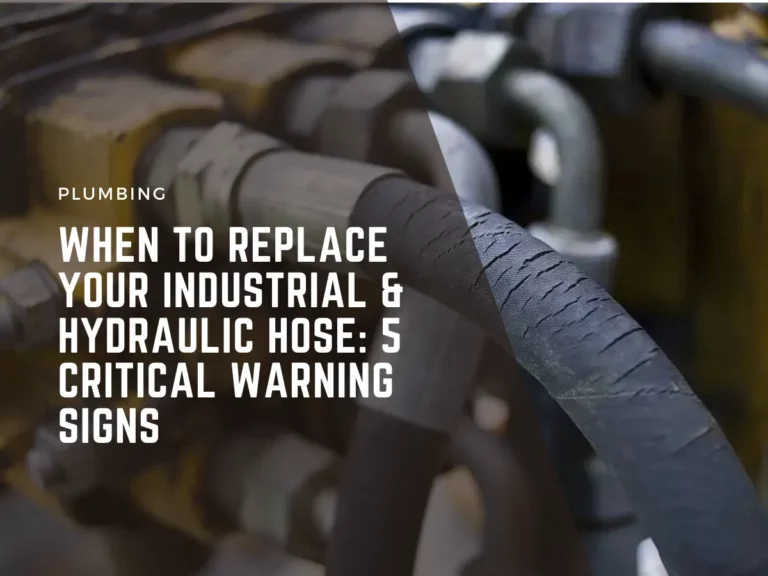
Damage accumulates slowly — our notes on when to replace a hydraulic hose help with replacement timing. Maintenance teams get hands-on refresher sessions, especially after installing new machinery or altering workflows.
Choosing the Right Hose Pipe
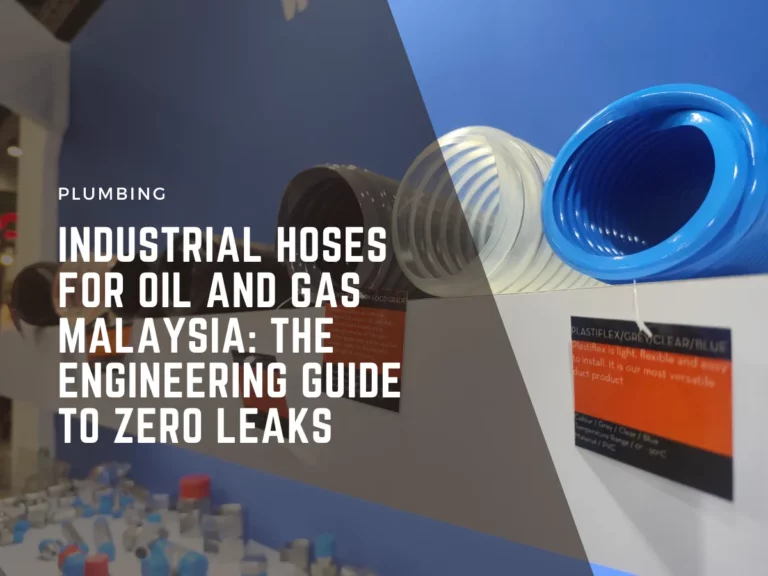
Specification starts with matching hose construction to service — pressure, temperature, fluid compatibility, and flex profile. Our guide to industrial hose selection covers the trade-offs.
Hose constructions vary by reinforcement (one-wire braid R1, two-wire braid R2, four-wire spiral R12, etc.), cover compound (NBR, CSM, polyurethane), and inner-tube material. Bend radius is published per construction; a tighter minimum bend radius typically means a stiffer hose. Confirm against the operating envelope, not on assumption.
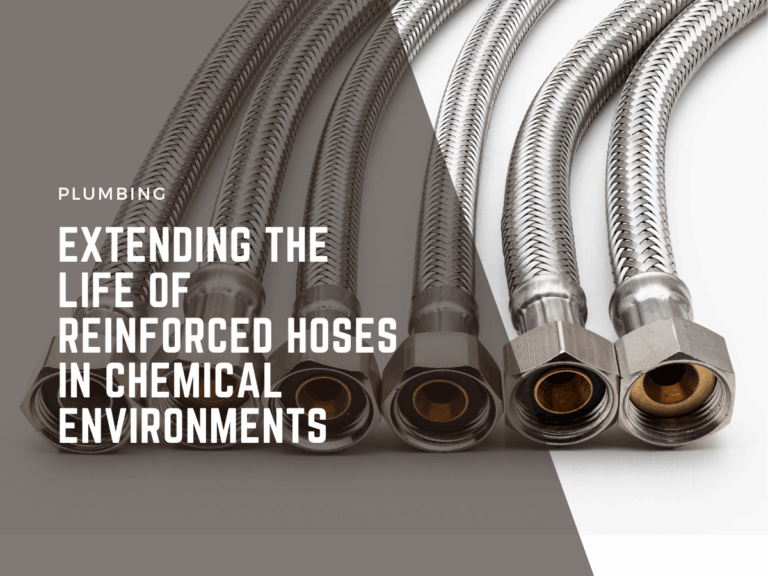
Material trade-offs: a steel-braided hose carries higher pressure and is less flexible; a rubber-lined hose routes more easily but carries less pressure. Specify against the dominant loading on the application. Crimped fittings and skive-style terminations reduce twist at the fitting interface.
Match the hose to compatible couplings and fittings. A thread-standard mismatch or under-sized ferrule produces pressure loss and accelerates loosening under vibration.
Field Practice for Hose Management
Plants that treat hose as a documented asset rather than a consumable see fewer unplanned events. Practical field controls:
- Hose maps: Document each hose run, its terminations, and installation date. Failure response is faster with the asset record in hand.
- Tag high-risk runs: Sections exposed to motion, heat, or traffic warrant tighter inspection cadence, regardless of visible damage.
- Train installers: Hose installation skill compounds across the plant. Refresher training after layout changes or machinery additions is high-leverage.
- Specify correct lengths: Excess length sags and kinks. Measure to the run; do not default to oversized hose.
Marking installation dates on the hose cover and pairing each hose with its fitting record at install is a low-cost control that pays back in reduced troubleshooting time.
Keeping Operations Reliable
Kinked and twisted hose reduces flow and triggers process disruption. The controls — correct specification, installation at minimum bend radius, secure clamping, scheduled inspection — are individually small and collectively decisive.
Malaysia’s industrial envelope — heat, humidity, vibration — demands more support than a temperate operating envelope. Specifying for those conditions and clamping for vibration reduces unplanned change-outs.
Preventing kinks and twists comes down to specifying the right bend radius, securing the hose against twist-load, and inspecting routinely for the early signs of misuse. The hose that holds its shape under operating cycles is the hose that doesn’t fail mid-shift. For a selection of steel flexible hose specified for industrial service, see what Simlecco has to offer.