- Introduction: The Hidden Cost of "Sweating" Pipes
- Why Many Suppliers Fail (The Distributor Gap)
- 1. The "Sweating" Pipe: Combatting Condensation
- CUI Inspection Practice
- 2. Valves & Fittings: The Moisture Trap
- 3. Galvanic Corrosion in Process Piping
- Technical Comparison: 304 vs 316L Pipe in Humidity
- Critical Warning: Expanded Principal Liability
- Frequently Asked Questions (FAQ)
- 1. How does climate affect industrial process piping selection in Malaysia?
- 2. Why is maintenance important for industrial fluid systems?
- 3. How do corrosion-resistant pipes perform in Malaysian industrial environments?
- 4. What troubleshooting steps should be taken for leaks in process piping?
- 5. Where can I buy industrial process piping components in Malaysia?
- 1-Minute Decision Checklist
In Malaysia’s year-end monsoon season, industrial process piping and fluid systems face accelerated degradation from sustained humidity and thermal cycling. Moisture penetrates insulation, condenses on cold-service piping, and initiates Corrosion Under Insulation (CUI). To maintain process piping integrity, specify 316L pipe fittings and water-vapour barriers rated for the service envelope across Petaling Jaya, Shah Alam, and the coastal industrial zones.
Introduction: The Hidden Cost of “Sweating” Pipes
From late October in Petaling Jaya, the operating envelope shifts. For a maintenance engineer this is the start of the corrosion calendar. Process piping that runs cleanly through August develops weeping joints and corroded supports by November. These failures are not random; they trace to moisture loading on systems not specified for the tropics.
Industry estimates suggest unplanned shutdown costs in critical Malaysian processing plants commonly fall in the RM50,000–RM100,000+ per hour range, with refinery-scale incidents reaching higher. This guide covers how humidity attacks process piping and how to specify materials and inspection practice that survive the Malaysian monsoon.
Why Many Suppliers Fail (The Distributor Gap)
Suppliers who treat Malaysia as a temperate climate stock standard-grade components that perform in Europe but fail in sustained tropical humidity. Common gaps:
- Selling carbon-steel pipe supports without verifying coating thickness against outdoor exposure.
- Ignoring water-vapour transmission rates on insulation systems.
- Specifying 304 stainless on coastal process piping where chloride-induced pitting will be the dominant failure mode.
At Simlecco we audit inventory against local environmental conditions. Pipe stored in a damp Klang warehouse needs different protection from pipe shipped from a dry consolidation hub. Compression-tube fittings on instrumentation hookups (DK-Lok or equivalent twin-ferrule design) are specified for their metal-to-metal sealing geometry — the seal does not depend on elastomer compression that can degrade with humidity cycling.
1. The “Sweating” Pipe: Combatting Condensation
Condensation is the dominant external loading on cold-service process piping in Malaysia. Cold fluid flowing through metal piping in humid ambient air produces surface condensation when the exposed surface is below the air’s dew point. The condensate drips onto lower pipe runs, structural supports, and electrical conduit.
Standard pipe insulation often fails to block water-vapour drive. Once moisture penetrates the insulation, it produces the conditions for Corrosion Under Insulation (CUI): the trapped condensate acts as an electrolyte and attacks the pipe wall from the outside.
Detailed inspection and management of CUI follows NACE SP0198:2017 (Control of Corrosion Under Thermal Insulation and Fireproofing Materials) and API RP 583:2026 (Corrosion Under Insulation and Fireproofing). Reference these standards in the CUI inspection plan.
CUI Inspection Practice
Routine CUI inspection includes thermography to identify cold spots indicating water ingress, visual inspection of insulation cladding for damage, and selective insulation removal at clamps, supports, and termination points where water accumulation is most likely.
2. Valves & Fittings: The Moisture Trap
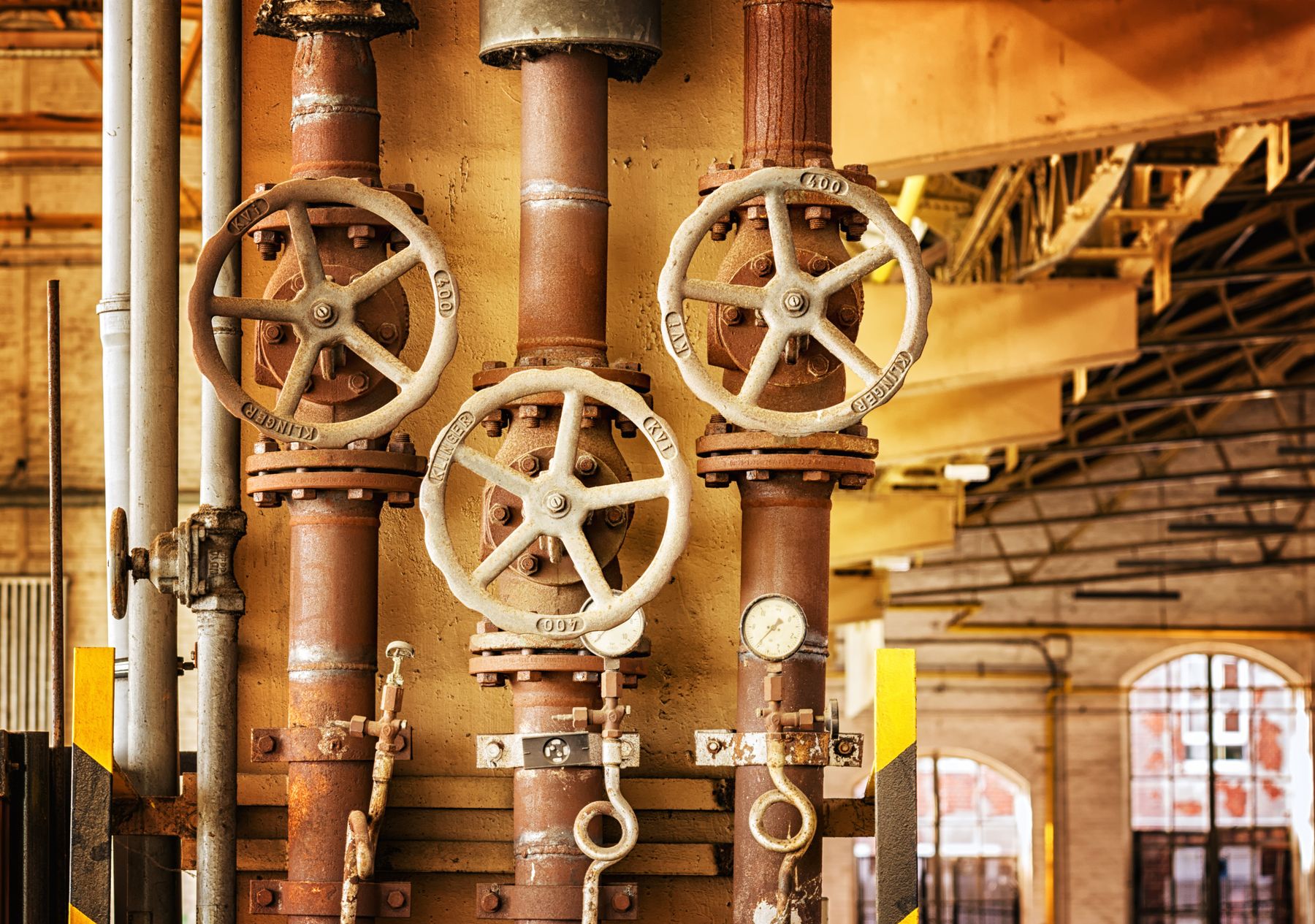
Under sustained humidity, fluid-control components on outdoor service struggle. Moisture accumulates at the valve bonnet and at tight crevices on fittings. On manual valves in wet environments (outdoor tanks in Pasir Gudang, for example), surface rust on the handle is a leading indicator of moisture migration to the stem packing.
Specify 316L instrumentation components for connections on humid outdoor service. The molybdenum content resists the pitting initiation that seizes carbon-steel assemblies.
3. Galvanic Corrosion in Process Piping
Pipe connections see continuous wet-dry cycling. Afternoon sun expands the pipe; overnight rain cools and condenses moisture onto the same connection. The thermal-and-moisture cycle loosens threaded and bolted assemblies.
Condensed water acts as an electrolyte. Mixed-material assemblies (carbon-steel clamps on stainless pipe, for example) develop galvanic corrosion under the persistent condensate film — the threads degrade and assembly integrity is lost.
Technical Comparison: 304 vs 316L Pipe in Humidity
| Feature | 304 Pipe Alloy | 316L Pipe Alloy |
| Molybdenum Content | None | 2-3% (Critical) |
| Moisture Resistance | Moderate (Surface Rust likely) | High (Resists Pitting) |
| Ideal Location | Indoor / Dry Service | Outdoor / Wet Service |
| Monsoon Risk | Pitting risk depends on chloride exposure | More pitting-resistant, not immune |
CRITICAL SAFETY WARNING:
Do not ignore weeping joints. A weeping pipe fitting in October often becomes a blowout in December. Where water accumulation is observed on a gas line, do not tighten under pressure — depressurise and inspect. Tightening a corroded fitting under live pressure risks shearing the nut and producing a catastrophic failure.
Critical Warning: Expanded Principal Liability
Why traceability matters:
Section 18A of OSHA 1994, as amended in 2022, covers contractors working under the principal’s direction as to how the work is done. Where a corroded pipe fails and causes injury, DOSH investigators look for maintenance records and material certifications.
Traceable, certified pipe components (DK-Lok and equivalent) allow the operator to demonstrate that material grade matches the service specification. Generic parts without batch traceability provide no audit evidence.
Frequently Asked Questions (FAQ)
1. How does climate affect industrial process piping selection in Malaysia?
Malaysian ambient humidity routinely exceeds 80%, with overnight peaks above 90% in coastal industrial zones. This humidity envelope is the operating reality for CUI risk planning. Condensation on cold-service lines drives external corrosion; sustained moisture promotes rust on carbon-steel piping. Specify moisture-resistant alloys (316L) on outdoor service to prevent premature pipe failure.
2. Why is maintenance important for industrial fluid systems?
Routine inspection prevents catastrophic pipe failure. Under high humidity, supports rust and condensation conceals corrosion under insulation. Scheduled inspection identifies water accumulation and weeping fittings before rupture, protecting personnel and avoiding unplanned shutdown.
3. How do corrosion-resistant pipes perform in Malaysian industrial environments?
316L stainless piping outperforms standard alloys under Malaysian conditions. The 2–3% molybdenum content resists chloride pitting in coastal exposure (Pengerang, Kerteh), extending service life on outdoor and offshore-adjacent runs.
4. What troubleshooting steps should be taken for leaks in process piping?
If a leak is detected on an industrial fluid system, depressurise first. Do not tighten a pipe fitting under live pressure. Inspect for external corrosion driven by condensation and for galvanic attack at mixed-material joints. Where the pipe wall is thinned by corrosion, replace the section.
5. Where can I buy industrial process piping components in Malaysia?
Source from authorised distributors with traceable inventory. Simlecco stocks instrumentation pipe, Flexible Hoses, and NACE-compliant fittings in Selangor, serving Shah Alam, Kerteh, and Bintulu with components matched to DOSH safety requirements.
1-Minute Decision Checklist
Before sourcing pipe and process-piping components for the monsoon season, verify these points:
When choosing a process-piping supplier, check 4 things:
- [ ] Material match: Do they specify 316L vs 304 against outdoor service?
- [ ] Moisture defence: Do they understand condensation risk on cold-service lines and CUI controls?
- [ ] Traceability: Can they provide batch codes for pipe and MTRs for fittings?
- [ ] Local stock: Is the pipe stock available in Selangor now, or in transit?
Don’t let the monsoon stop production. Contact our technical team to audit your outdoor process-piping runs.
Disclaimer: All brand names mentioned are trademarks of their respective holders.