- Introduction: The "Weakest Link" in Your Piping System
- Why Many Specifications Fail (The Distributor Gap)
- 1. Essential Types of Hoses in Oil & Gas
- A. Petroleum and Fuel Transfer Hoses
- B. Composite Hoses (The Terminal Standard)
- C. Metal & Specialty Hoses
- Quick Reference: Hose Type Comparison
- 2. The 4 Pillars of Hose Selection
- A. Media Compatibility (The Inner Tubing)
- B. Pressure, Temperature, and Bend Radius
- C. Static Electricity Dissipation (Continuity)
- D. Professional Assembly and Handling
- Critical Warning: Duty of Care & DOSH Compliance
- Inspection Guidelines: When to Retire a Hose
- 1-Minute Decision Checklist
Selecting safe industrial hoses for oil and gas Malaysia requires more than just picking a tube. To meet DOSH safety standards and prevent spills, engineers must specify media-compatible composite hose or stainless steel assemblies, ensure static dissipation per API RP 2003, and use permanent hydraulic crimps—never temporary clamps coupling.
Introduction: The “Weakest Link” in Your Piping System
An oil-hose failure at a refinery loading bay can vent hydrocarbons into a hazardous area in seconds — triggering the emergency shutdown and, in the worst case, an ignition source. For terminal operators in Pengerang and similar hubs, hose selection sits on the critical path between routine transfer and a recordable incident.
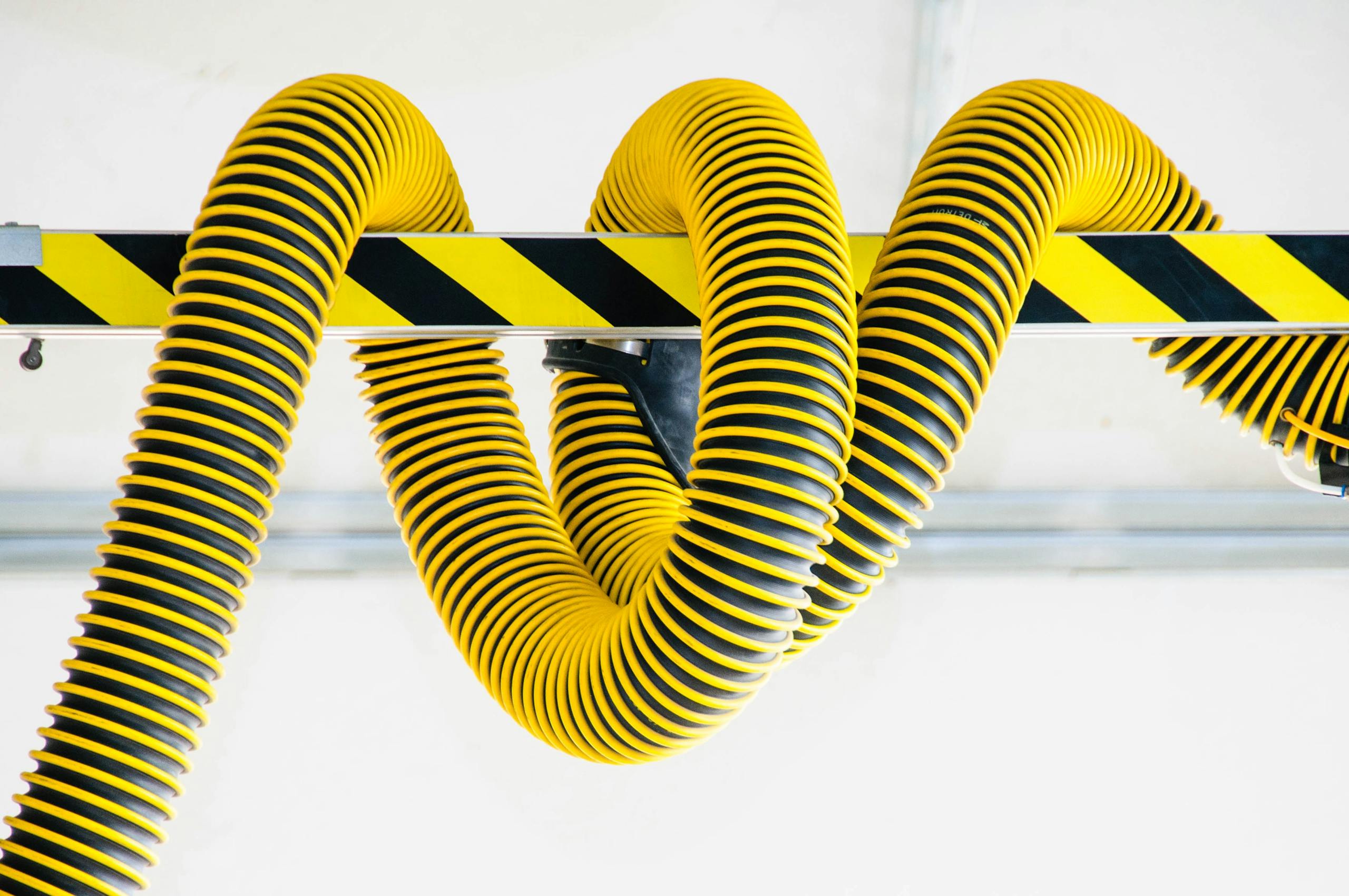
For anyone who works in hazardous industries, that scene is a constant operational risk. As offshore exploration pushes into new horizons like Petronas Carigali’s Kasawari gas development off Sarawak, the physical demands on every industrial hose increase. Pressure spikes transfer violent vibrations down the line; if a hose cannot absorb this movement, it transfers excessive stress to the nozzles, leading to misalignment and premature wear on the mechanical seal of your upstream industrial pumps.
These are not simple tubes purchased on price. They are engineered, dynamic line components subject to surge pressure, vibration, and chemical attack — not pressure vessels under the boiler code, but assemblies whose failure modes warrant the same engineering rigour. Choosing the wrong assembly guarantees premature failure. This guide breaks down the technical selection criteria for oil and gas flexible hoses in the Malaysian energy sector.
Why Many Specifications Fail (The Distributor Gap)
Many suppliers fail because they sell hoses as commodities, not engineered assemblies.
Common and dangerous errors we see in the market include:
- The Clamping Error: Using a temporary hose mender or a generic clamps coupling (like a worm-drive Jubilee clip) instead of machine-crimped ferrules. Under high pressure, this creates a severe risk of blowout.
- The “General Purpose” Trap: A buyer asks for a water or air line and is sold a generic pvc hose or a standard unigawa hose. While excellent for general factory water, these will degrade rapidly if exposed to hydrocarbons.
- The Venting Mistake: Using a standard pvc hose or lightweight ducting hose to vent explosive hydrocarbon vapors instead of properly grounded, anti-static ducting.
As the authorised DK-Lok distributor for Malaysian O&G, Simlecco runs the STAMPED selection check (Size, Temperature, Application, Media, Pressure, Ends, Delivery) before supplying any hose fitting or assembly to a hazardous zone. STAMPED is a selection mnemonic, not an audit standard — but missing any parameter at the specification stage propagates downstream.
1. Essential Types of Hoses in Oil & Gas
No single hose design fits every duty across heavy industries. Here is how we categorize them for our clients in Kemaman and Bintulu.
A. Petroleum and Fuel Transfer Hoses
- Construction: An inner core of highly resistant industrial rubber protected by a tough outer cover, built to EN 1765:2016 (rubber hose assemblies for oil suction and discharge services) for road tanker and depot transfer, or EN 13765:2018 (thermoplastic multi-layer hoses for the transfer of hydrocarbons) for terminal applications. For ship-to-shore dock service, specify against OCIMF GMPHOM 2009. API 1529 applies to aviation fuelling hose only and should not be cited for general petroleum transfer.
- Application: Tank truck loading and depot transfers.
- Simlecco Warning: A standard nitrile rubber hose handles basic diesel and crude fine. However, high-aromatic hydrocarbons (like Benzene or Toluene) require upgraded industrial rubber compounds (like Viton) to prevent the tube from swelling.
B. Composite Hoses (The Terminal Standard)
- Construction: Multiple layers of thermoplastic films individually wrapped between internal and external wire spirals (conforming to EN 13765:2018).
- Application: Ship-to-shore transfer.
- The Simlecco Advantage: A composite hose is incredibly lightweight compared to a heavy industrial rubber hose. Depending on the inner film, composite hose assemblies offer broad chemical compatibility.
C. Metal & Specialty Hoses
- Stainless Steel Flexible Hose: A corrugated stainless steel inner core covered with a braided layer. Used where high temperature or vibration requires a flexible connection, or as an alternative to a rigid expansion joint.
- Hydraulic Hose: Built with high strength wire braids to handle extreme system pressures, preventing dangerous hydraulic fluid leaks or oil mist atomization.
- Pneumatic Tubing & Thermoplastic Hose: Used for instrumentation control and chemical dosing lines.
(Note: For shipyard rig maintenance, we also supply specialized sand blast hose assemblies with ultra-thick abrasive-resistant inner tubes).
Quick Reference: Hose Type Comparison
| Hose Type | Best For | Pressure | Temp Limit | Weight |
| Rubber Petroleum | General Fuel Loading | Medium | Medium | Heavy |
| Composite | Marine/Chemical Transfer | Medium | Medium | Light |
| Stainless Steel | Hot Steam / Corrosives | High | High | Heavy |
2. The 4 Pillars of Hose Selection
A. Media Compatibility (The Inner Tubing)
The inner tubing material must handle the exact fluid.
- If moving liquefied gas, you need a specialized cryogenic gas hose.
- For aggressive refinery chemicals, PTFE-lined tubing is required.
B. Pressure, Temperature, and Bend Radius
You must account for surge pressure (Water Hammer). Furthermore, heat severely degrades standard rubber. Always consult the manufacturer’s temperature-pressure derating curve. Finally, exceeding the minimum bend radius will fatigue the reinforcement layers and lead to premature rupture.
C. Static Electricity Dissipation (Continuity)
When moving refined fuels through an industrial rubber hose, static charge builds up on the tubing wall.
- The Standard: Fuel industrial hoses in flammable service should undergo electrical continuity testing. This ensures resistance meets the limits specified by API RP 2003 or ISO 8031 (typically < 10⁶ ohms), safely dissipating charge to ground and preventing a spark.
D. Professional Assembly and Handling
A premium hose will fail if the connection is weak or the handling is poor.
- Fittings: For high-pressure steam, heavy-duty ground joint couplings offer superior safety over basic threads.
- Handling: When lifting large dock industrial hoses, never lift by the coupling. Use proper lifting slings attached to a wire rope hoist (rather than a bare wire rope which can slice into the outer cover).
Critical Warning: Duty of Care & DOSH Compliance
Why Traceability Matters:
Under Malaysia’s Occupational Safety and Health Act 1994 and the 2022 Amendments, the employer (Principal) bears the ultimate responsibility for providing a safe system of work.
If a rubber hose assembly fails and causes an incident, DOSH investigators are likely to review design documentation, Hydrostatic Test Certificates, and material traceability to determine if duties were met. Simlecco tags and registers every high-risk assembly we build, providing the compliance documentation required to demonstrate due diligence.
Inspection Guidelines: When to Retire a Hose
Follow the inspection and testing interval recommended by the manufacturer and applicable site standards (e.g., OCIMF GMPHOM 2009 for dock-hose service, or OCIMF MEG4 (Mooring Equipment Guidelines, 4th Edition) for mooring-related assemblies). In many terminal services, this involves visual checks before use, and formal documented testing every 6 to 12 months.
| Visual Defect | Action Required |
| Outer cover cracked, wire exposed | Remove from service immediately |
| Coupling shows corrosion or slippage | Replace or professionally re-crimp |
| Hose feels stiff/brittle at bend points | Replace – material degradation likely |
| Continuity test fails | Remove from flammable service immediately |
1-Minute Decision Checklist
Before authorizing a purchase, verify these 4 points:
Hose Safety Check:
- [ ] Media Match: Is the inner tubing rated for the specific aromatic content?
- [ ] Static Safety: Does the quote specify a “Continuity Tested” assembly per API/ISO?
- [ ] Fitting Security: Are the ends hydraulically crimped (NOT clamped)?
- [ ] Certification: Will the supplier provide a Hydrostatic Test Certificate?
Contact our technical team to review your terminal’s hose register against the standards above.
Related Simlecco guides: industrial hose selection in Malaysia, quick solutions for low pressure in hydraulic hoses, low flow problems in industrial pipe hoses, common issues with industrial hose fittings, dealing with common hydraulic hose failures.
Disclaimer: All brand names mentioned are trademarks of their respective holders and are used here for identification purposes only.