- Match the Ball Valve to the Service, Not the Price
- What Most Articles Get Wrong About Ball Valve Selection
- The Four Decisions That Determine Fit
- 1. Body material: match the alloy to the fluid
- 2. Pressure and temperature rating: read the class, not the WOG stamp
- 3. Bore: full for pigging and rod-out, reduced for cost
- 4. Seat material: the temperature ceiling most buyers miss
- Floating or Trunnion: The Structural Choice Behind the Ball
- What Malaysian Plants Need to Know: Certification and Traceability
- Frequently Asked Questions
- 1-Minute Ball Valve Selection Checklist
Choose a ball valve by matching four things to your service: body material (WCB for clean hydrocarbons, 316 for chlorides, NACE-qualified alloys for sour gas), pressure class per ASME B16.34, bore (full for pigging, reduced for cost), and seat material for temperature. Then demand the certificates that prove it.
Match the Ball Valve to the Service, Not the Price
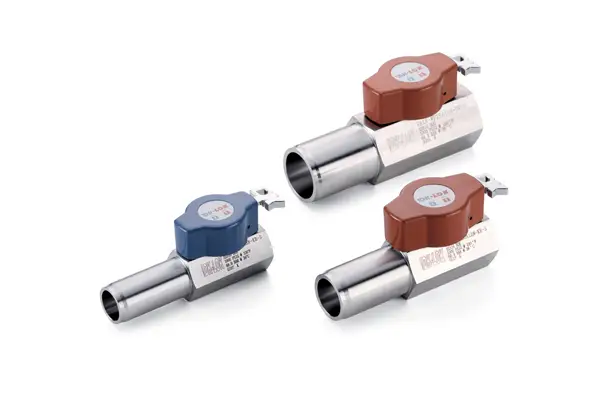
Choosing a ball valve comes down to matching the body material, pressure class, bore, and seat to the fluid and conditions it will see. Think of the valve as a single rotating gate with a hole bored through it, where a quarter-turn either lines that hole up with the pipe or turns it broadside to shut off flow. That mechanical simplicity is why ball valves dominate isolation duty, but it hides the decisions that matter: a valve rated to the correct ASME B16.34:2025 pressure class in the wrong body alloy will still pit and seize in a coastal Malaysian plant within a season. If you specify these valves or raise the purchase order, this guide walks you through the four selection decisions, and the certificates you should refuse to buy without.
Get the selection wrong and the cost lands on procurement: a re-order, a failed hydrotest, or a valve that passes inspection on paper and leaks in the field. Get it right and the valve becomes the part of the system nobody thinks about again. If you are still choosing between valve families rather than sizing a ball valve, start with how the main industrial valve types compare and ball valve versus gate valve; this guide assumes a ball valve is already the right fit.
What Most Articles Get Wrong About Ball Valve Selection
Most selection guides stop at “pick a material and a pressure rating,” then move on. The decisions that cause field problems (bore, seat, and the paperwork that proves the valve is what the label claims) get a sentence each.
Bore is the clearest example. Buyers assume “full port” is a standardised, universal spec. It is not. On a chemical-engineering forum thread on port sizing, veteran engineer Art Montemayor noted that “there are no valve standards for full port ball valves… Pressure drop alone is NOT the only consideration for specifying a full bore ball valve” (Cheresources community discussion). In the same thread, another engineer explained the real driver most catalogues skip: “My number one reason for specifying full-port valves is rod-out potential. For slurries I use full-port ball valves because I worry… the eddies downstream of the ball will lead to solids deposition.” The bore decision is about what the line has to *do*: pass a pig, clear a rod, avoid solids.
The second gap is compliance. None of the top-ranking selection guides address what a Malaysian buyer actually has to defend: DOSH pressure-system expectations, material traceability, and the difference between a valve that is *certified* fire-safe and one merely *described* as fire-safe. That gap is the second half of this guide.
The Four Decisions That Determine Fit
1. Body material: match the alloy to the fluid
The body alloy is the decision that most often gets value-engineered down and most often fails. WCB (cast carbon steel to ASTM A216 WCB) is the low-cost default for clean, dry hydrocarbons and utilities at moderate temperature. It corrodes in wet, chloride-bearing, or sour service.
For chloride exposure (coastal air, seawater cooling, brine), specify 316 stainless (its cast body equivalent is CF8M). The molybdenum in 316 is what resists chloride pitting, which is the failure mode that eats carbon steel in a coastal plant like the petrochemical belt at Pasir Gudang. For sour service (fluids carrying H₂S), the material must be qualified to NACE MR0175-2021 / ISO 15156-2020, which governs hardness and processing to prevent sulfide stress cracking, relevant to sour gas gathered around Kerteh. NACE compliance may push the specification to 316L, duplex stainless, or a specified corrosion-resistant alloy.
The rule underneath all three: the fluid selects the alloy. Price only breaks a tie between two materials that both survive the service.
2. Pressure and temperature rating: read the class, not the WOG stamp
A ball valve’s pressure capability is defined by its ASME B16.34 pressure class (150, 300, 600, 900, 1500, 2500), not by the largest number cast on the body. Many commodity valves are marked with a WOG (water-oil-gas cold working pressure) figure, which is a room-temperature rating. Your service is rarely at room temperature.
MAWP (maximum allowable working pressure) derates as temperature rises, and the amount of derating depends on the body material’s allowable stress. A valve that reads 2,000 WOG cold may be well below that at 200 °C. Confirm the pressure class *at your operating temperature*, from the manufacturer’s pressure–temperature table, before you accept a valve against a spec.
3. Bore: full for pigging and rod-out, reduced for cost
Full-bore (full-port) valves have an opening close to the pipe’s inside diameter, so flow passes with almost no restriction, and a pig or a cleaning rod can pass through. Reduced-bore valves step the opening down one size: lower cost and weight, a small added pressure drop, and no pigging path. Choose full-bore when the line is pigged, carries slurry or solids, or cannot tolerate pressure drop; choose reduced-bore when none of those apply and cost matters.
4. Seat material: the temperature ceiling most buyers miss
The seat, not the ball, usually sets the temperature limit. Virgin PTFE (a soft fluoropolymer seat) is bubble-tight and chemically broad but is generally held to around 200 °C. Reinforced PTFE (RPTFE) adds creep and wear resistance at similar temperatures. PEEK (a high-temperature engineering polymer) extends the ceiling further, and above the polymer range you move to a metal-seated valve (Stellite-faced or equivalent) for steam, high temperature, or abrasive duty, accepting a higher permissible leakage class in exchange.
Metal seats seal differently. An engineer testing metal-seated valves reported on a forum that with “ball in closed position we pressurized ball cavity and at about 10 bar leakage left and right from the ball detected” (Cheresources metal-seated ball valve discussion). Match the seat’s tightness class, verified per API 598:2023 or ISO 5208-2015 test standards, to what your process can tolerate.
Floating or Trunnion: The Structural Choice Behind the Ball
Underneath the four decisions sits one structural choice. In a floating ball valve the ball is not fixed; line pressure pushes it against the downstream seat to make the seal. It is simple and economical, but the operating torque climbs as pressure and size increase. In a trunnion-mounted valve the ball is anchored top and bottom by shafts (trunnions), and spring-loaded seats are pushed onto the fixed ball, so operating torque stays roughly flat regardless of pressure, at higher cost.
| Attribute | Floating ball | Trunnion-mounted ball |
|---|---|---|
| Sealing mechanism | Line pressure pushes ball onto downstream seat | Fixed ball; spring-loaded seats pushed onto ball |
| Operating torque vs pressure | Rises with pressure and size | Stays roughly constant |
| Typical size / class range | Up to ~6″, up to Class 600 | ~8″ and above, or Class 900 and higher |
| Load path | Downstream seat carries ball thrust | Trunnions carry thrust; seats seal independently |
| Large-bore / pigged lines | Limited | Suited |
| Relative cost | Lower | Higher |
Rule of thumb: below roughly 6-inch bore and ASME Class 600, a floating ball valve is usually the economical choice; at 8-inch and above, or Class 900 and higher, specify trunnion-mounted. In a floating design, the operating torque climbs with pressure, while a trunnion valve’s seats carry the load and keep torque manageable. (Source: Tiger Valve — floating vs trunnion ball valves.)
What Malaysian Plants Need to Know: Certification and Traceability
This is where a Malaysian purchase differs from a generic one. Under Malaysia’s occupational safety framework and DOSH oversight of pressure systems, a valve on a registered pressure system has to be defensible on paper as well as functional in the line.
Three documents decide that. First, a mill test report: an EN 10204 3.1 MTR (a certificate issued by the manufacturer with test results) ties the body and ball material to a verifiable heat code. A valve without a traceable heat code is impossible to certify cleanly under a DOSH audit. The full DK-Lok documentation chain of MTRs, heat codes, and test records is what a Malaysian O&G procurement file should hold. Second, for fire-risk service, insist on a genuine fire-test certificate to API 607 (fire test for quarter-turn valves) or API 6FA-4th (2018). Both expose the valve to roughly 760 °C for 30 minutes and set post-fire leakage limits, and API 6FA additionally requires the valve to still operate after the burn. A “fire-safe design” line in a datasheet is not the same as a certificate; ask for the test report. Third, for sour service, require the NACE MR0175-2021 material documentation on the purchase order.
Note for the Plant Manager: A single uncertified valve on a Kerteh sour-service line creates due-diligence exposure well beyond its purchase price. Under the OSH (Amendment) Act 2022, the Expanded Principal Liability framework asks whoever approved the system to demonstrate that risk controls were in place. The MTR and NACE documentation are that demonstration.
The last layer is provenance. Counterfeit and grey-market valves carry convincing markings and no verifiable chain. As the authorised DK-Lok distributor in Malaysia, Simlecco supplies against documented heat codes and manufacturer certification, so the paperwork you present at audit matches the metal in the line. Before you commit an order, it is worth knowing how to vet an industrial valve supplier in Malaysia, because provenance is only as good as the distributor behind it.
Why Traceability Matters in Malaysian O&G:
Heat codes and mill certificates are the document trail that turns an audit finding into a closed item instead of a prosecution. Verify every pressure-boundary component against its certification.
Frequently Asked Questions
Full port or reduced port: which do I need?
Choose full port when the line is pigged, carries slurry or solids, or cannot tolerate pressure drop. Choose reduced port when none of those applies and cost or weight matters. “Full port” is not a single standardised dimension, so confirm the actual bore against the manufacturer’s data rather than trusting the label.
Is a 316 stainless ball valve always better than carbon steel?
No. It is better for the right service. Carbon steel (WCB) is appropriate and cheaper for clean, dry hydrocarbons and utilities. 316 earns its cost where chlorides, moisture, or corrosive media are present, because its molybdenum content resists the pitting that destroys carbon steel in coastal and chemical environments.
How do I know a “fire-safe” ball valve is genuinely certified?
Ask for the fire-test certificate to API 607 or API 6FA and read the certificate itself. A certificate names the test standard, the tested size and pressure class, and the measured post-fire leakage. “Fire-safe design” without a test report is a claim, not proof.
Floating or trunnion for a high-pressure line?
Trunnion-mounted for large-bore or high-pressure service, broadly 8-inch and above or Class 900 and higher, because the trunnions carry the ball thrust and keep operating torque manageable. Floating designs are simpler and economical for smaller, lower-pressure lines.
1-Minute Ball Valve Selection Checklist
- Confirm the fluid, maximum pressure, and maximum temperature before opening a catalogue.
- Match body material to the service (WCB, 316/CF8M, or a NACE-qualified alloy), not to the lowest quote.
- Verify the ASME B16.34 pressure class at operating temperature, not just the WOG stamp.
- Decide full versus reduced bore on pigging and pressure-drop needs.
- Confirm the seat material covers your temperature ceiling and the right tightness class.
- For fire-risk service, demand the API 607 / API 6FA certificate, not a “fire-safe” label.
- For sour service, require NACE MR0175-2021 material documentation.
- Confirm heat-code traceability (EN 10204 3.1 MTR) and authorised-distributor provenance.
Once a valve is specified, learn the warning signs a ball valve is about to fail so it is replaced before it leaks. Where a ball valve cannot isolate or vent a line cleanly, consider why some systems need a dedicated purge valve.
Need help choosing the right ball valve for your plant?
Click the WhatsApp button on this page, or fill in the contact form and we’ll respond within one business day.
Disclaimer: All brand names mentioned are trademarks of their respective holders.