- Choose the Needle Valve for Fine Control or Small-Bore Isolation
- What Most Articles Get Wrong About Needle Valves
- Is a Needle Valve Even the Right Valve?
- The Four Decisions That Set the Specification
- 1. Seat: soft for bubble-tight isolation, metal for severe service
- 2. Packing: the temperature ceiling you can read off the datasheet
- 3. Stem: non-rotating to protect the seat, and the right tip
- 4. Body and pressure series: match the DK-Lok range to the duty
- What Malaysian Plants Need to Know: Sour Service and Traceability
- Frequently Asked Questions
- 1-Minute Needle Valve Selection Checklist
Choose a needle valve for a small-bore line, generally under 1 inch, that needs fine, repeatable flow control or tight isolation: a gauge root, a bleed point, a sample take-off, or a metering line. Match the seat, packing, stem, body, and pressure series to the service. For simple on/off isolation on a large line, a ball valve is the right choice.
Choose the Needle Valve for Fine Control or Small-Bore Isolation
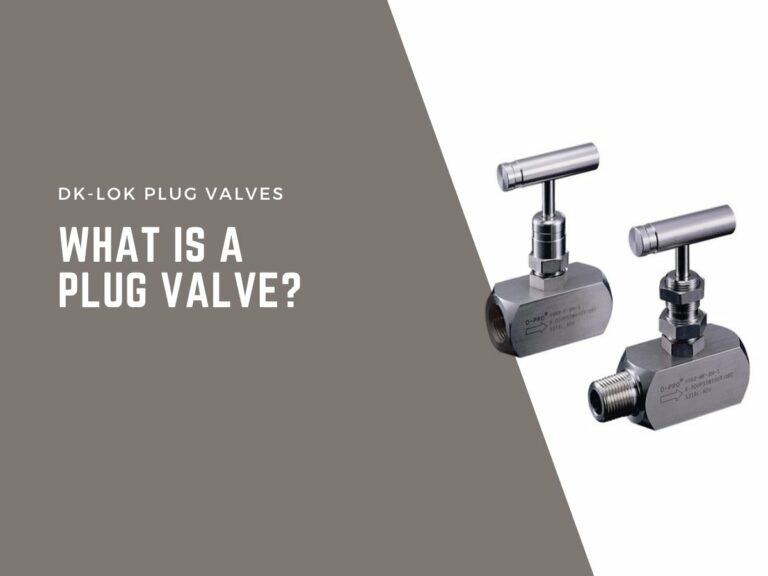
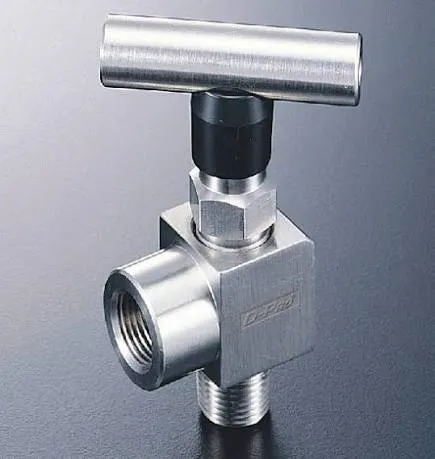
A needle valve is for a small-bore line, generally under 1 inch, that needs fine, repeatable flow control or tight isolation, such as a gauge root, bleed point, sample take-off, or chemical-injection metering line. Think of it as a dimmer switch for the line: a long tapered stem screws down into a matching seat, so each turn opens or closes the flow passage by a hair rather than all at once. That near-linear, multi-turn control is exactly what makes it the wrong valve for simple on/off isolation of a large line, where a quarter-turn ball valve belongs.
If you specify instrument valves or sign off the hook-up bill of materials, the first job is to confirm the needle valve is even the right valve, then to match the seat, packing, stem, body, and pressure rating to the service. This guide walks through those decisions and names the DK-Lok series that fit each one.
What Most Articles Get Wrong About Needle Valves
Most needle-valve guides describe the mechanism and stop. They rarely tell a buyer when *not* to use one, and that decision wastes the most money.
A needle valve is built for fine throttling and tight isolation on small lines. As one throttling-valve reference puts it, “choose a needle valve for small diameter lines (usually under 1 inch) where ultra-fine, precise adjustment of flow is required, such as in chemical dosing or instrumentation air systems” (EPCLand — throttling valve selection). Push it outside that job, and it underperforms: its small orifice and high pressure drop make it a poor choice for large-line on/off duty (use a ball valve) or larger-line modulation (use a globe valve). Specifying a needle valve where a ball valve belongs buys precision the line never uses, at a pressure-drop penalty it pays every day.
The second thing the generic pages skip is that the seat, packing, and stem decisions have temperature and service limits you can read straight off a manufacturer datasheet, and should, before the valve is on a purchase order.
Is a Needle Valve Even the Right Valve?
Start here, because the answer decides everything downstream.
| Valve | Primary job | Line size | Control style | Best use |
|---|---|---|---|---|
| Needle valve | Fine throttling / tight isolation | Small-bore (under ~1″) | Precise, multi-turn | Gauge root, bleed, sample take-off, metering |
| Ball valve | On/off isolation | Small to large | Quarter-turn on/off | Fast isolation, minimal pressure drop |
| Globe valve | Modulating throttling | Larger lines | Linear throttling | Larger-line flow regulation |
A suitable needle valve provides fine throttling or small-bore isolation; a standard ball valve provides on/off isolation. Confirm you need fine control or isolation on a small line before you go further. If the duty is large-line on/off or modulation, the wider industrial valve-type guide points to the right family. If you do need a needle valve, four decisions set the specification.
The Four Decisions That Set the Specification
1. Seat: soft for bubble-tight isolation, metal for severe service
The seat decides how tightly the valve shuts and how hard a service it survives. A soft seat (typically PTFE or PCTFE) gives repeatable bubble-tight closure, the right choice when clean isolation matters more than surviving temperature extremes. A suitable soft-seat needle valve can isolate gauges, transmitters, switches, or manifolds. A metal seat is for high temperature, severe service, and abrasive or dirty media, accepting a slightly higher leakage class in exchange.
2. Packing: the temperature ceiling you can read off the datasheet
Packing seals the stem, and it sets the valve’s temperature limit. Check this first.
Rule of thumb: standard PTFE (a soft fluoropolymer) packing carries a needle valve to about 232 °C (449 °F); above that, check the selected packing and valve ratings. For V16/VH16, Grafoil is limited to 523 °C in air and 648 °C (1,200 °F) in steam. (Source: DK-Lok V16/VH16 needle valve datasheet.)
The DK-Lok hex-body V46A datasheet makes the material dependence explicit: stainless steel with PTFE is rated −54 to 232 °C, stainless with Grafoil −54 to 648 °C, and carbon steel with PTFE only −29 to 176 °C. Match the packing to the hottest condition the line sees, not the average.
3. Stem: non-rotating to protect the seat, and the right tip
On a valve you cycle often, the stem design decides how long the seat lasts. A non-rotating stem tip does not spin against the seat as you close it. Per the DK-Lok V16/VH16 datasheet, this is “for maximum metal seat life and positive seal,” preventing the galling (metal-to-metal scoring) that scars a rotating tip over repeated closures. For instrument valves that isolate a gauge every shift, that difference is between a valve that seals for years and one that weeps after a season.
The stem tip is selected by service: a standard globe tip for general isolation, a regulating tip (the DK-Lok “-R” option) for finer metering, and a ball tip (“-B”) for frequent on/off within the needle-valve body.
4. Body and pressure series: match the DK-Lok range to the duty
Needle-valve bodies come as integral-bonnet (compact, the bonnet machined into the body), bar-stock or hex-body (machined from solid, with the packing isolated below the stem threads), and union-bonnet (severe service, with a union nut that prevents accidental disassembly). The specific series sets the pressure rating, not the “needle valve” category. DK-Lok’s instrument needle valves span roughly 3,000 to 10,000 psig depending on series.
| DK-Lok series | Body type | Max pressure* | Fits |
|---|---|---|---|
| VG16 | General-utility service | 6,000 psig (413 bar) | Instrument air, nitrogen header, lube oil |
| VS13 | Non-rotating stem | 3,000 psig (207 bar) | Repeatable isolation; sour via -SG |
| VB16 | Integral bonnet | 6,000 psig (413 bar) | Compact high-pressure instrument |
| V96 | Rising-stem plug | 6,000 psig (413 bar) | Gauge-root (¼” or ½” FNPT gauge ports) |
| V46A | Hex body (bar-stock) | 10,000 psig (689 bar) | General high-pressure; sour via -SG |
| V16 / VH16 | Union bonnet | 10,000 psig (689 bar) | Severe / high-temperature service |
*Per the respective DK-Lok datasheet; ratings derate as temperature rises. End connections across the range include DK-Lok tube fitting, male or female NPT, and socket weld.
What Malaysian Plants Need to Know: Sour Service and Traceability
For Malaysian oil and gas, two compliance points decide the specification. First, sour service. On H₂S-bearing lines, the gathering and processing service is common around Kerteh; the wetted materials must be qualified to NACE MR0175-2021 / ISO 15156-2020 to resist sulfide stress cracking. DK-Lok supplies sour-service needle valves on the V46A and VS13 series through a “-SG” order suffix, with wetted components selected to the standard. Record it on the purchase order.
Second, the documentation. Every needle valve on a registered pressure system should arrive with a material test report tying its body to a heat code, and a factory test record: DK-Lok pressure-tests its needle valves with nitrogen at 1,000 psig to a maximum leak rate of 0.1 SCCM (standard cubic centimetres per minute). Keep the records required by the governing code and purchase specification; specify API 598:2023 or ISO 5208:2015 testing where applicable. DOSH does not impose both tests on every needle valve.
Note for the Plant Manager: On a Pengerang RAPID instrument hook-up, a needle valve is a pressure-boundary component like any other. The applicable sour-service material record, specified factory test record, and heat-code traceability form the due-diligence trail. A valve that seals perfectly but arrives with no documentation is still an audit finding waiting to open.
Why Traceability Matters in Malaysian O&G:
An uncertified instrument valve on a sour line is a corrosion-cracking and audit risk at once. The material and test documentation is the trail that proves the valve was specified correctly.
Provenance closes the loop. As the authorised DK-Lok distributor in Malaysia, Simlecco supplies the needle-valve range with manufacturer certification and heat-code documentation, so the paperwork presented at audit matches the valve in the hook-up.
Frequently Asked Questions
Needle valve or ball valve: how do I decide?
A needle valve for fine, repeatable throttling or tight isolation on a small line (under about 1 inch): gauge roots, bleeds, sample and metering points. A ball valve for fast on/off isolation with minimal pressure drop. For simple on/off duty on a large flowing line, a needle valve adds an unnecessary restriction.
PTFE or graphite packing: which do I specify?
PTFE for most instrument service, rated to around 232 °C. For hotter service, check the graphite (Grafoil) option: V16/VH16 limits are 523 °C in air and 648 °C in steam. Match the packing to the hottest condition the valve will see, and confirm the figure on the specific series datasheet.
Why does a non-rotating stem matter?
Because the stem tip does not spin against the seat as it closes, it avoids the galling that scores a rotating tip over repeated cycles. On a valve isolated and reopened frequently, this protects seat life and keeps the shutoff tight. Specify it wherever the valve is cycled often.
What pressure can a DK-Lok needle valve handle?
It depends on the series, the series: roughly 3,000 psig (VS13) up to 10,000 psig (V46A, V16/VH16), with VB16 and V96 at 6,000 psig. Specify against the series datasheet at your operating temperature, since the rating derates as temperature rises.
1-Minute Needle Valve Selection Checklist
- Confirm the line needs fine throttling or tight isolation on a small bore; for simple on/off duty on a large line, specify a ball valve instead.
- Choose the seat: soft (PTFE/PCTFE) for bubble-tight isolation, metal for high temperature or severe service.
- Match packing to the hottest condition and series: V16/VH16 PTFE to ~232 °C; Grafoil to 523 °C in air or 648 °C in steam.
- Specify a non-rotating stem for valves cycled often, and match the tip (globe / regulating / ball) to the duty.
- Select the DK-Lok series to the pressure and body type: VG16, VS13, VB16, V96, V46A, or V16/VH16.
- For sour service, order the NACE MR0175 (-SG) material option and record it on the PO.
- Require material, test and heat-code records to the governing code and purchase specification.
- Confirm authorised-distributor provenance for the certification to hold at audit.
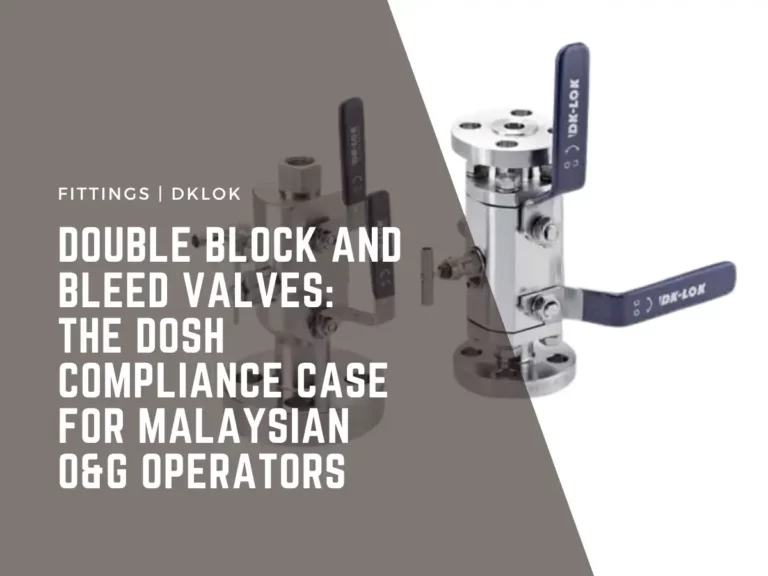
On the same instrument hook-up, the needle valve usually sits alongside a 3-valve or 5-valve instrument manifold, and where a line demands positive isolation for maintenance, a double block-and-bleed valve needs documentation to the governing code and purchase specification.
Need help specifying needle valves for your instrument hook-up?
Click the WhatsApp button on this page, or fill in the contact form and we’ll respond within one business day.
Disclaimer: All brand names mentioned are trademarks of their respective holders.