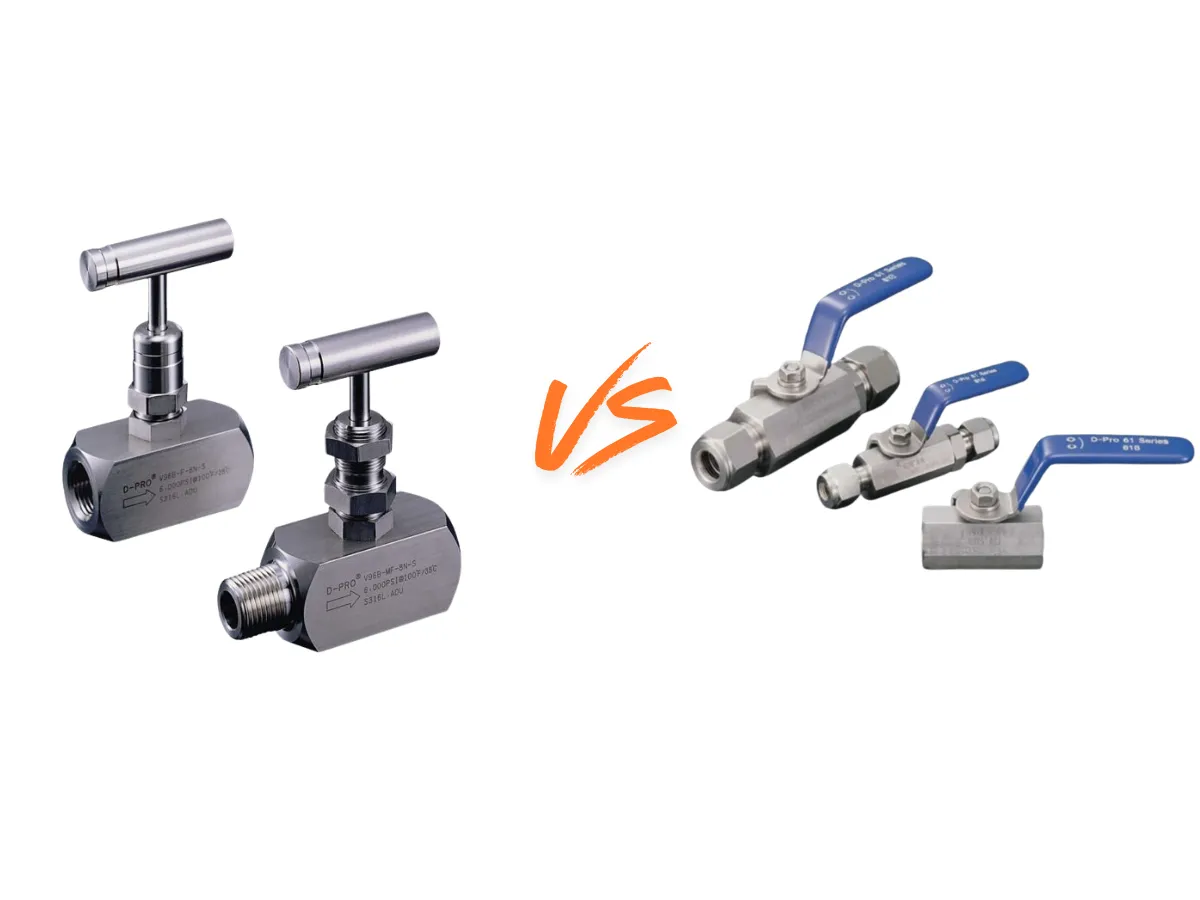
The choice between a Ball Valve and a Gate Valve defines your system’s safety and flow efficiency. Ball Valves (Quarter-Turn) offer fast shut-off and tight sealing, making them essential for high-pressure gas lines in Kerteh. Gate Valves (Multi-Turn) excel in large-diameter pipelines where minimizing pressure drop is critical. To prevent costly downtime, engineers must evaluate durability, valve body design, and flow control needs before specification.
Introduction: The “Simple” Choice That Stops Production
When a plant shuts down because a single valve type jammed, nobody remembers the 15% saving on the Purchase Order. They remember the lost production, the emergency repair crew in Pasir Gudang working at 2 AM, and the difficult DOSH safety review that follows.
Both valves isolate flow, yet their behaviors in service are opposites. Pick the wrong valve type, and you risk dangerous pressure spikes, fugitive emissions, or a line that won’t seal during a hydro-test. Pick the right valve, and the line runs for decades.
In this 2026 guide, we break down the 7 critical selection factors we use at Simlec Co to help Malaysian clients choose the right isolation valve.
Why Many Specifications Fail (The Distributor Gap)
Many failures happen because suppliers treat valves as “Commodities” rather than “Engineered Safety Devices.”
Common specification errors include:
- The “Cheap Gate” Trap: Using a cheap brass gate for frequent cycling, leading to stem thread wear and leaks.
- The “Fast Ball” Danger: Using a fast-closing ball valve on a high pressure liquid line, causing a surge that bursts pipelines.
- Ignoring Standards: Supplying generic valves instead of API 6D or API 600 compliant units.
At Simlec Co, we audit your P&ID against the application. We understand that a valve body in a Shah Alam food plant has different needs than one on an offshore rig in Labuan.
Factor 1: Operating Speed & Emergency Shut-Off
Speed is a double-edged sword for pressure management.
- Ball Valves (Fast): Operate with a 90° turn. This rapid action is critical for Emergency Shutdown (ESD) systems where you need to stop flow instantly.
- Gate Valves (Slow): Require multiple turns of the stem via a handwheel. This slow closure is a safety feature in high-pressure liquid lines because it prevents Water Hammer—the destructive pressure spike caused by stopping fluid too fast.
Simlec Rule: Use ball valves for Gas/ESD. Use gate valves for liquid mains where surge is a risk.
Factor 2: Sealing Performance & Leakage
“Bubble Tight” vs. “Functional Seal.”
- Ball Valves: The spherical ball presses into soft seats (PTFE/PEEK), offering excellent sealing tightness. This is non-negotiable for hazardous gas pipelines.
- Gate Valves: Rely on a metal gate sliding against metal seats. While offering good durability, they often allow minor seepage over time, especially if the valve body distorts under thermal stress.
Factor 3: Flow Characteristics & Pressure Drop
How much energy does the valve steal?
- Gate Valves (Full Bore): When the gate retracts, the flow path is unobstructed. The pressure drop is near zero, maintaining high flow rates in utility headers.
- Ball Valves: Standard designs often have a reduced port, creating turbulence and pressure loss. You must specify “Full Port” to minimize restriction.
Factor 4: Throttling (The #1 Operator Error)
NEVER use a ball or gate valve for throttling.
- Ball Valve: Throttling erodes the soft seat rapidly, sometimes within days, destroying the sealing surface.
- Gate Valve: Throttling causes “Gate Chatter,” vibration that destroys the stem and gate.
- The Solution: If you need to regulate flow volume or pressure, the right valve is a Globe Valve.
Factor 5: Maintenance & Durability
- Ball Valves: Low-maintenance in clean service. The rotary motion wipes the seat clean. Modern designs offer high durability with minimal intervention.
- Gate Valves: The rising stem threads are exposed to dust/salt air in places like Pengerang. They require regular greasing. If the stem seizes, the gate cannot be lifted.
Factor 6: Cost vs. TCO (Total Cost of Ownership)
- Gate Valves: Generally cheaper upfront for sizes >6 inches.
- Ball Valves: Higher CAPEX, but usually lower OPEX (less maintenance).
- Butterfly Valve Comparison: For pipelines above 10 inches, a Butterfly Valve is often 40% cheaper and lighter than both ball and gate valves, though it offers lower pressure ratings.
Factor 7: Media Compatibility
- Knife Gate Valves: Specifically designed for slurries. The sharp edge cuts through sludge that would clog other valves.
- Ball Valves: Poor for slurries. Grit gets trapped in the valve body cavity, scratching the ball.
Comparison Summary: Valve Types
| Feature | Ball Valve | Gate Valve | Butterfly Valve | Globe Valve |
| Flow Restriction | Low (Full Port) | Lowest | Moderate | High |
| Sealing | Excellent | Good | Good | Excellent |
| Throttling? | NO | NO | Limited | YES |
| Pressure Drop | Low | Negligible | Low | High |
| Durability | High | High | Moderate | High |
Critical Warning: Expanded Principal Liability
Why Standards Matter:
Under the Occupational Safety and Health (Amendment) Act 2022, the “Principal” (Plant Owner) faces increased responsibility to ensure equipment integrity.
Using non-compliant valves that leak hazardous gas complicates compliance verification. Simlec ensures all valves meet API, ASME, and ISO standards to support your safety audit trail.
Frequently Asked Questions (FAQ)
a) What are the main differences between ball valves and gate valves?
The main difference lies in the closing mechanism and flow control. A ball valve uses a rotating sphere for fast, quarter-turn shut-off, ideal for on/off control. A gate valve uses a rising gate for slow, multi-turn isolation, ideal for preventing pressure surges (water hammer) in liquid lines.
b) What are the advantages and disadvantages of ball valves compared to gate valves?
Ball valves offer faster operation, tighter sealing, and higher durability in frequent-cycle applications. Their disadvantage is higher cost in large sizes and susceptibility to pressure surges if closed too fast. Gate valves are cheaper for large pipes and reduce water hammer, but are slower to operate and prone to stem leakage.
c) How do I choose between a ball valve and a gate valve for my application?
Select the right valve based on speed and media. If you need emergency isolation or bubble-tight sealing for gas, choose a ball valve. If you are managing a large water main where flow resistance must be zero and closing speed isn’t critical, choose a gate valve.
d) What are the typical applications of ball valves and gate valves?
Ball valves are standard in O&G process lines, instrument air, and chemical skids in Shah Alam. Gate valves are typically found in utility headers, cooling water mains, and upstream oil pipelines where full-bore flow is required for pigging operations.
e) How do flow characteristics differ between ball valves and gate valves in piping systems?
A full-bore gate valve has almost zero pressure drop because the gate retracts fully. A standard ball valve often creates a slight venturi effect (turbulence) due to the port design. However, a globe valve creates significant pressure drop due to its internal Z-shape.
f) When is a ball valve preferred over a gate valve in high-temperature environments?
A ball valve is preferred in high-temperature environments if equipped with the right seats. Standard PTFE seats limit usage to ~200°C. For temperatures above 250°C, specify PEEK or Metal Seats. For extreme steam heat (>400°C), a wedge gate valve is often preferred to avoid thermal binding.
g) What maintenance practices differ between ball valves and gate valves?
Ball valves are low maintenance; the primary task is exercising them periodically to prevent the seats from sticking. Gate valves require more attention: the threaded stem must be lubricated regularly to prevent corrosion in humid Malaysian air, and the packing gland often needs tightening to stop leaks.
1-Minute Decision Checklist
Before ordering, verify these 4 points:
When choosing a Valve, check 4 things:
- [ ] Speed: Do you need instant shut-off (Ball) or surge damping (Gate)?
- [ ] Throttling: If yes, switch to a Globe Valve.
- [ ] Slurry Service: If yes, specify a Knife Gate Valve.
- [ ] Sealing: Do you need bubble-tight shut-off (Ball) or just flow stops (Gate)?
Don’t compromise your pipelines.Contact our technical team to specify the right valve body materials
Disclaimer: All brand names mentioned are trademarks of their respective holders and are used here for identification purposes only.