- Introduction
- Why Many Specifications Fail (The Distributor Gap)
- The Cost of Leaks and Corrosion
- 1. Isolation Valves (Stop/Start Service)
- Gate Valves
- Ball Valves
- Butterfly Valves
- Plug Valves
- Stop Valves: Straight and Angled Configurations
- 2. Regulation Valves (Throttling Service)
- Globe Valves
- Needle Valves
- Diaphragm & Pinch Valves
- 3. Protection Valves (Safety & Direction)
- Check Valves
- Pressure Relief Valve (PRV) & Safety Valve
- 4. Actuation: Muscle for the Valve
- Comparison Summary: Which Valve Where?
- Sustainability: Why Specification Quality Matters
- Critical Warning: Expanded Principal Liability
- Frequently Asked Questions (FAQ)
- 1. What is the most important factor in valve selection?
- 2. Can I use a Ball Valve for flow control?
- 3. When should I use a Plug Valve instead of a Ball Valve?
- 4. Why do I need a Pressure Relief Valve?
- 5. What is the difference between a stop valve and a shut-off valve?
- 1-Minute Decision Checklist
Proper valve selection is the cornerstone of plant safety — think of valves as the traffic controllers of fluid flow, where isolation valves are the on/off switches, regulation valves are the dimmer dials, and protection valves are the emergency shutoffs. In Malaysia, the most common industrial valve types include Gate (Isolation), Globe (Throttling), Ball (Quick Shut-off), and Pressure Relief Valves (Safety). Engineers must match the valve design to the specific fluid, pressure, and flow requirements while adhering to valve standards like API 6D and DOSH Malaysia regulations to prevent costly failures.
Introduction
Industrial valve selection is a function of service medium, pressure-temperature envelope, actuation requirement, and isolation reliability. If you specify or procure valves for a Malaysian process plant, this guide walks you through the seven families and the selection logic that maps service conditions to valve type.
Valves are not limited to heavy industry. Restaurants, hotels, office parks, and food-processing sites all run commercial plumbing systems where valves stop flow during a leak, throttle hot-water lines, prevent backflow into clean supply, and adjust pressure on long pipe runs. The principles are the same as on a refinery skid — only the duty conditions change.
This guide moves beyond the catalog. We explain exactly where each valve type fits in the Malaysian landscape, from Kerteh gas terminals to Selangor water works.
Why Many Specifications Fail (The Distributor Gap)
They see “2-inch Valve” on a requisition and supply the cheapest option. Common errors include:
- The Throttling Trap: Selling a rotary valve for flow control (it erodes the seat).
- The Material Mismatch: Supplying cast iron for high-pressure steam (it can crack; carbon steel is required).
- The Sizing Error: Ignoring proper valve sizing (Cv), leading to noise and cavitation.
Simlecco audits the P&ID at the BOM build stage to ensure the right valve is specified for the duty. For the procurement-side framework, see our guide to vetting an industrial valve supplier in Malaysia.
The Cost of Leaks and Corrosion
Leaks and corrosion are the two failure modes that drive most valve-replacement budgets. A leak on a process line is not a drip — it is a safety incident, a notifiable event under DOSH Malaysia, and a cleanup bill. Corrosion is slower but more expensive: it weakens the valve body from the inside until a stem snaps or a seat blows out without warning.
Material choice is the front-line defence. Stainless steel bodies (316L grade per ASTM A276:2017) resist most process chemistries Malaysian plants run. For acid service, Hastelloy or a PTFE-lined diaphragm valve removes the metal-on-fluid contact entirely. Specifying the cheap option here turns into a six-figure replacement programme inside three years.
1. Isolation Valves (Stop/Start Service)
These valves are designed to be fully Open or fully Closed to stop fluid flow. For a focused head-to-head, see our ball valve vs gate valve comparison.
Gate Valves
- Mechanism: A metal gate (disc or wedge) slides down inside the body to block the flow. The handwheel, stem, bonnet, and body are the standard component set.
- Best For: Full-bore isolation where minimal pressure drop is critical.
- Materials: Often cast iron for water or carbon steel for oil.
- Malaysian Context: Widely used in Air Selangor mains and large commercial buildings.
- Do not use for frequent cycling or for throttling: partial-open positions chew the gate edges and the seat.
Ball Valves
- Mechanism: A sphere with a hole rotates 90° to control flow. Lever-operated for fast shut-off.
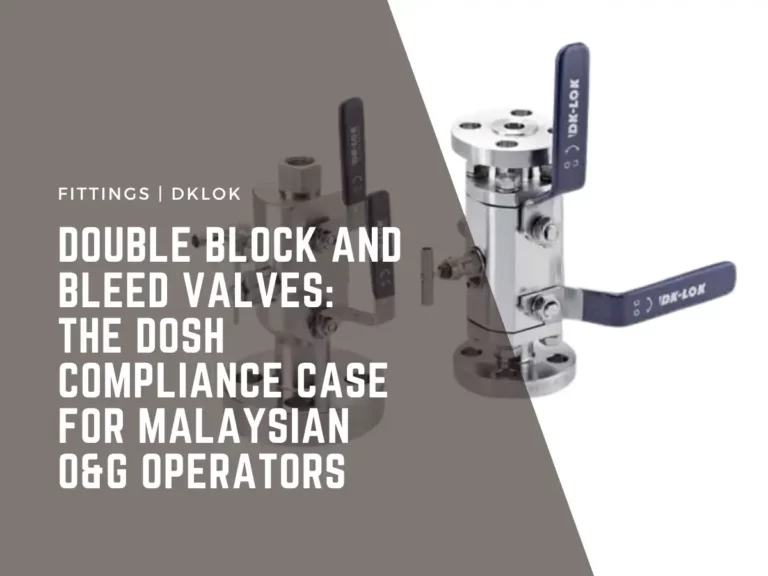
- Best For: Tight sealing in gas and fluid lines, on/off service, instrumentation manifolds.
- Malaysian Context: Standard for Petronas skids.
- Never operate a ball valve in a partially open position (especially around 45°). The high-velocity jet erodes the seat and the ball surface within hours: a recurring diagnostic on engineering forums, where an Eng-Tips thread on diagnosing steam ball valve seat failure documents how the unsupported seat at the half-open position is consumed within hours of throttling service. Avoid in slurries too; grit scratches the valve body internals.
Butterfly Valves
- Mechanism: A quarter-turn rotating disc inside the body. The stem connects the handle to the disc; rotating opens or closes the valve, partially or fully.
- Best For: Large-diameter water lines, HVAC, fire systems, and commercial plumbing where space and weight matter.
- The gasket is the wear point, not the body. Plan a gasket-replacement cycle as part of preventive maintenance: the valve body will outlast the seal by an order of magnitude.
Plug Valves
- Mechanism: A cylindrical or tapered plug rotates to block flow.
- Best For: “Dirty” service. Unlike a ball, plug valves have no cavities for debris to trap.
- Excellent for wastewater and sludge lines where other industrial valve types clog.
Stop Valves: Straight and Angled Configurations
- Mechanism: A stop valve is built to halt flow, full stop. Internal mechanism may be gate, globe, or ball based.
- Configuration: Straight stop valves run inline when fixtures are aligned. Angled stop valves turn flow 90° when fixtures sit offset from the supply pipe.
- Best For: Industrial plumbing supply isolation, point-of-use shut-off on fixtures, maintenance lockouts.
2. Regulation Valves (Throttling Service)
These are designed to control how much fluid passes through, managing flow rate and pressure.
Globe Valves
- Mechanism: A plug (stopper) moves into a seat (baffle) to restrict fluid. The traditional design uses a handwheel, stem, and dual inlet/outlet openings.
- Best For: Flow regulation, throttling, and pressure control where precise adjustment matters.
- Malaysian Context: Essential for boiler feed water and steam-balance loops.
- Creates high pressure drop, and operates slowly compared to rotary valves: trade-offs worth accepting for the control accuracy.
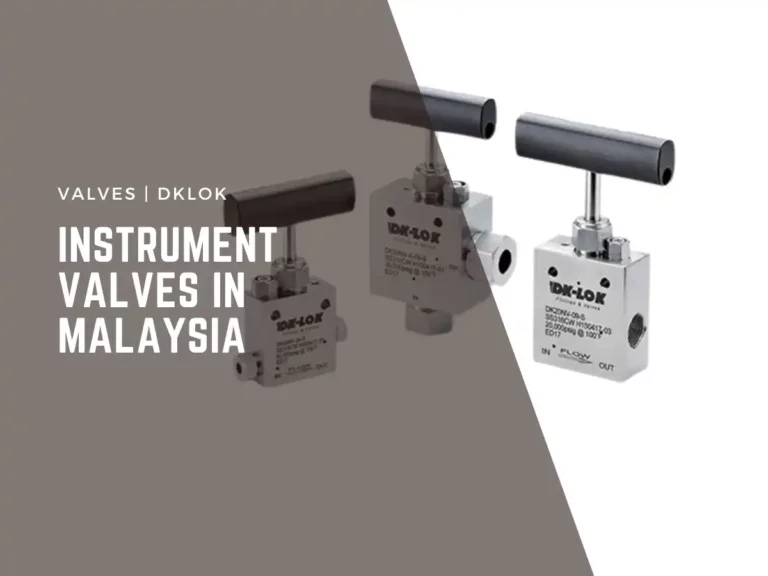
Needle Valves
- Mechanism: A fine tapered plunger allows minute flow adjustments.
- Best For: Protecting gauges from pressure spikes. On differential pressure transmitter hookups, needle valves are also paired into 3-valve vs 5-valve instrument manifolds.
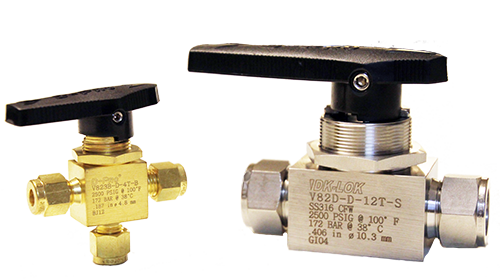
- Malaysian Context: Found on almost everyDK-LOK Manifold.
Diaphragm & Pinch Valves
- Mechanism: A flexible liner (diaphragm or sleeve) is compressed to stop flow.
- Best For: Corrosive chemical processing or slurries. The fluid never touches metal parts.
- Ideal for acids where expensive alloys like Hastelloy would otherwise be needed.
3. Protection Valves (Safety & Direction)
Check Valves
- Mechanism: Allows flow in only one direction to prevent reverse flow. Most check valves operate automatically using physics: no actuator, no signal needed. Internal mechanisms vary: spring-loaded disc, diaphragm, swing flapper, or ball-on-seat.
- Best For: Pump discharge lines (prevents pressure surge damage). Also critical in potable-water systems to block cross-connection: wastewater flowing back into clean supply.
- Sizing is key to prevent “chattering.” Match the check mechanism to the line: swing checks suit steady flow, spring checks suit pulsing flow.
Pressure Relief Valve (PRV) & Safety Valve
- Mechanism: Opens automatically at a set pressure.
- Best For: Pressure relief to protect tanks from explosion.
- These safety valve devices require annual calibration under DOSH Malaysia.
4. Actuation: Muscle for the Valve
How do you move the valve? Beyond isolation and throttling, certain process lines also need purge valves for safe blow-down and inert-gas sweeping.
- Manual Valve: Handwheel or lever. Good for infrequent use.
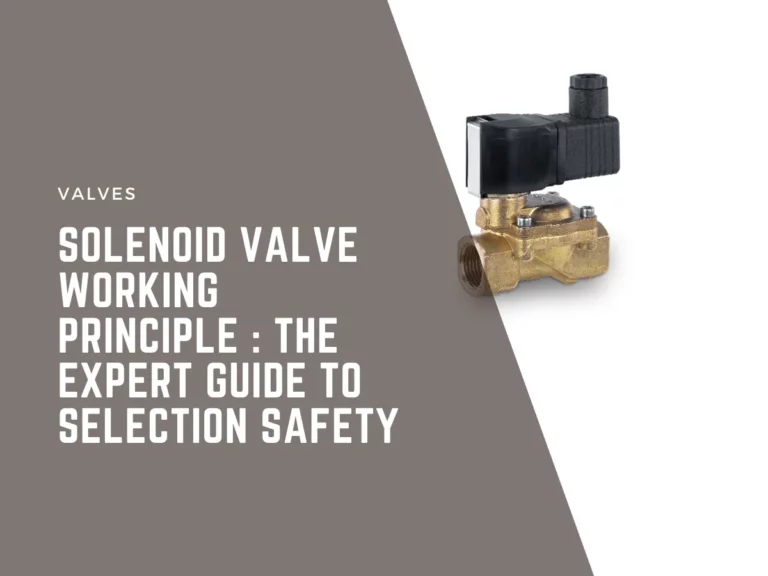
- Solenoid Valve: Electric actuation for small, clean lines: see our guide to solenoid valve working principles for selection criteria.
- Pneumatic Actuator: Uses air pressure. Fast and explosion-proof (common in Oil & Gas).
- Hydraulic Actuators: Uses fluid power for massive torque on large valves.
Comparison Summary: Which Valve Where?
| Feature | Gate | Globe | Ball | Plug |
| Primary Function | Isolation | Throttling | Isolation | Isolation (Dirty) |
| Pressure Drop | Minimal | High | Low | Moderate |
| Shut-Off Tightness | Good | Excellent | Best | Good |
| Body Material | Cast Iron / Steel | Steel | Steel / SS | Carbon Steel / Iron |
| Flow Control | Poor | Best | Poor | Poor |
Sustainability: Why Specification Quality Matters
Valves do more than control flow — they cut leaks, save water and energy, and reduce the chemical losses that turn into environmental incidents. A poorly specified ball valve that weeps from the stem packing for three years wastes the fluid, contaminates the surrounding area, and forces a premature replacement. Specifying the correct valve once is the cheapest sustainability programme a plant can run.
Critical Warning: Expanded Principal Liability
Why Standards Matter:
Under the OSH (Amendment) Act 2022, the “Principal” is liable for equipment integrity.
If a cheap industrial valve fails in a high-pressure steam line because it didn’t meet API 6D, API 598:2023, or other valve standards, it is a reportable incident. Simlecco ensures every valve size and type meets the rigorous safety codes.
Frequently Asked Questions (FAQ)
1. What is the most important factor in valve selection?
The most important factor is the fluid properties (Corrosive? Slurry? Gas?). Matching the valve body and seat materials to the fluid prevents premature failure. Pressure and temperature are secondary but critical constraints.
2. Can I use a Ball Valve for flow control?
No. Throttling creates a high-velocity jet that erodes the soft seat — especially at the 45° position. Use a Globe, Needle, or specialised Control Valve for flow control.
3. When should I use a Plug Valve instead of a Ball Valve?
Use plug valves in “dirty” applications like sewage or mining slurries. They are robust and don’t trap debris inside the body cavity like ball valves do.
4. Why do I need a Pressure Relief Valve?
A pressure relief valve is a mandatory safety device. It prevents catastrophic vessel failure by venting excess fluid if system pressure spikes.
5. What is the difference between a stop valve and a shut-off valve?
A stop valve is a specific configuration, straight or angled, designed purely to halt flow at a fixture or supply point. Internally it may be a gate, globe, or ball mechanism. A general shut-off valve is the broader category; every isolation valve in this guide qualifies.
1-Minute Decision Checklist
Before ordering, verify these 4 points:
Valve Selection Check:
- [ ] Function: Is it Stop/Start (Isolation) or Flow Control (Throttling)?
- [ ] Media: Is the fluid clean or dirty? (If dirty, consider a Pinch Valve or Plug Valve).
- [ ] Pressure: Does the valve size and rating handle the max system pressure?
- [ ] Actuation: Do you need a Pneumatic Actuator or a Manual Valve?
Don’t guess with flow safety.Contact our technical team to ensure you choose the right valve or download theDK-Lok Valve Catalog. Simlecco is the authorised DK-Lok distributor in Malaysia.
Related Simlecco guides: plug valve fundamentals, why a gate valve gets stuck and how to fix it.
Disclaimer: All brand names mentioned are trademarks of their respective holders and are used here for identification purposes only.