- Understanding Corrosion in Flexible Steel Hoses
- Causes of Corrosion in Flexible Steel Hoses
- Corrosion Prevention Playbook for Stainless Steel Flexible Hoses
- Layer 1: Material Selection
- Layer 2: Design and Installation
- Layer 3: Inspection Cadence
- Choosing Quality Hoses from the Start
- Keeping Your System Healthy for the Long Term
The NACE IMPACT study (2016) estimated global corrosion cost at approximately US$2.5 trillion — about 3.4% of global GDP — making corrosion management a measurable business cost, not just a maintenance issue.
Stainless steel flexible hoses play an important role in industrial systems, transporting liquids or gases under pressure while remaining flexible enough to accommodate vibration or shifting equipment. However, even the strongest steel hose can encounter trouble when corrosion sets in.
Once rust or other types of damage take hold, it can quickly lead to leaks, breakages, and expensive downtime. Malaysia’s mix of wet weather and coastal humidity accelerates the wear on steel hoses if they are not properly maintained.
Corroded hoses pose not only a costly issue but also a significant safety hazard. We believe that keeping corrosion under control is a matter of consistent attention, proper storage, and qualified sourcing.
Taking the right steps early can keep your hoses safer for a longer lifespan, much like extending the life of reinforced hoses exposed to chemicals.
Understanding Corrosion in Flexible Steel Hoses
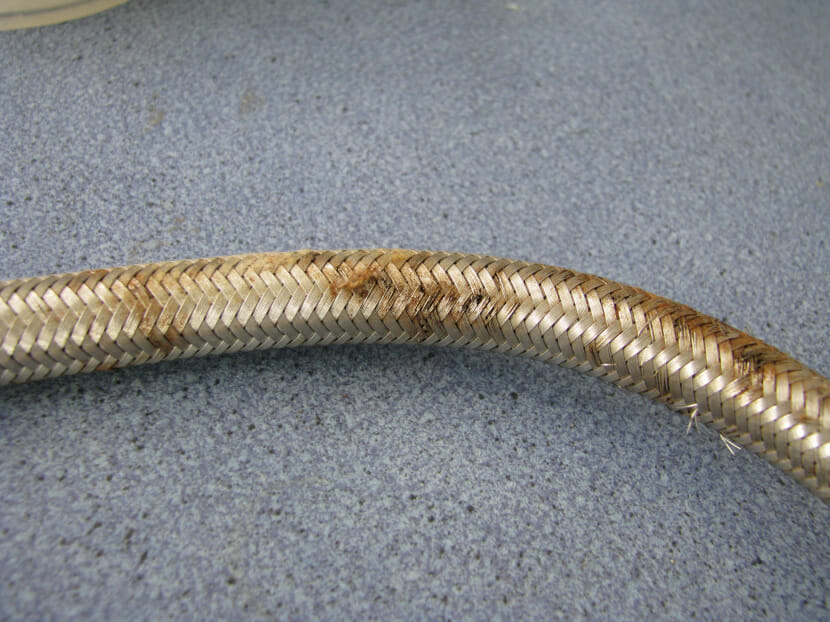
How does corrosion affect flexible steel hoses? Corrosion is a chemical reaction between a metal and its environment, typically occurring through exposure to air or liquids.
This reaction slowly breaks down the steel, compromising the hose’s integrity. Some types of corrosion are quick to spread, like surface rust, while others are more insidious and can cause failures from within.
We’ve identified a few common forms of corrosion that show up in steel hoses:
- Galvanic corrosion occurs when two dissimilar metals are connected in a damp environment, particularly in the presence of saltwater. The less resistant metal will break down faster, leading to early failure.
- Pitting corrosion shows up as small pits or holes in the metal. It is hard to see, but it can eat deep into the hose wall and cause sudden failure.
- Crevice corrosion forms where stagnant electrolyte gets trapped in tight spaces (under hose clamps, washer seats, or scale buildup), oxygen access is reduced, and the local pH drops. The protected zone becomes anodic relative to the bulk surface. For chloride-bearing service, design out crevices by using welded transitions instead of clamped, or specify higher-PREN alloys (6Mo, duplex 2205).
- Chloride stress corrosion cracking (CLSCC) is a combination of tensile stress and chloride exposure that produces fine branched cracks in austenitic stainless steel. These cracks weaken the hose over time and can lead to splitting, particularly above ~60 °C in chloride-bearing service.
This type of damage not only affects the hose’s appearance. It compromises its performance, too. A steel hose with even slight corrosion may lose its flexibility or seal integrity, which can quickly turn minor issues into significant failures.
Causes of Corrosion in Flexible Steel Hoses
What triggers corrosion in flexible steel hoses in Malaysia? It is often a combination of conditions, rather than a single cause. Understanding the triggers helps reduce the risks associated with them.
- High humidity: With moisture in the air nearly all year, Malaysian plants often face surface rust if hoses are not stored or maintained correctly.
- Chemical exposures: Some processes use or release chemicals that react with steel. Even cleaning agents can be aggressive if not rinsed off thoroughly.
- Salt in the air: If your operation is near the coast, salt can accumulate on metal surfaces, accelerating corrosion.
- Poor maintenance schedules: Skipping routine checks means small rust spots and leaks can be missed until the damage spreads.
- Wrong materials paired together: Using the wrong type of fitting (simlecco.com.my/product/pipe-thread-fittings) or clamp material can lead to galvanic corrosion if dissimilar metals come into contact in the presence of moisture.
Corrosion Prevention Playbook for Stainless Steel Flexible Hoses
Prevention works at three layers: material selection, environmental control, and inspection cadence. Each layer addresses a different failure path. The right choice at every layer compounds the protection rather than substituting for it.
Layer 1: Material Selection
Match the alloy to the chloride exposure. 304 SS holds up for moderate-chloride inland service but pits readily in salt-laden air. 316L adds molybdenum (PREN ~24-26) and extends usable life into coastal industrial duty, though it still pits in stagnant seawater above about 25 °C.
For aggressive marine or sour service, step up the alloy. 6Mo grades (UNS S31254 / 254 SMO) and duplex 2205 (PREN ~35) handle most coastal duties. Super-duplex 2507 (PREN ~42) covers the harshest splash-zone and brine service. Reference ASTM A269:2022 for instrumentation tubing and ASTM A276:2017 for bar stock per the hose construction.
Layer 2: Design and Installation
Design out the conditions that concentrate chloride. Eliminate stagnant pockets where dead-leg fluid evaporates and concentrates salt. Avoid mixed-metal contact — 316L bolted against carbon steel makes the steel anodic and accelerates its corrosion.
Prefer welded transitions over clamped joints where crevice corrosion is a credible risk. Specify a passivation treatment per ASTM A380 after fabrication so the free iron from cutting and welding is removed before service.
Layer 3: Inspection Cadence
Set the inspection interval to the service severity. Visual inspection every six months covers critical hose populations and catches discolouration or weep points early. Thermography on insulated runs identifies corrosion under insulation per NACE SP0198:2017 before the lagging hides a leak.
Ultrasonic thickness measurements track wall loss on aged populations. Record every inspection in the asset register against the heat code so the audit trail stays defensible for DOSH Malaysia review.
When the layered prevention discipline fails or wasn’t applied, replacement specification matters. The case study below shows how that decision works in practice.
At Simlecco., we understand that proactive maintenance is critical. We provide expert consultation on proper maintenance practices and selecting the right components to prevent corrosion and extend equipment life.
Choosing Quality Hoses from the Start
How can you guarantee the durability of your stainless steel flexible hoses from the very beginning?
Selecting high-quality, flexible steel hoses from the outset helps reduce maintenance headaches later on — sound industrial hose selection pays back over the equipment’s life. The way a hose is made can either fight corrosion or invite it.
Well-manufactured hoses tend to have better welds, more accurate lengths, and consistent thickness. Higher-quality fittings, such as those made from stainless steel 316, also resist corrosion more effectively.
A quick guide to use when searching for suppliers of stainless steel flexible hoses is to ask about the steel grade. Is it 304 or 316 stainless? You should also look at the pressure ratings and testing results available for their products.
Case Study: DK-Lok & Certified Performance
In demanding environments like the oil & gas industry, certified performance is non-negotiable. We’ve worked with clients who experienced failures with uncertified hoses.
By switching to an accredited solution like DK-Lok’s flexible metal hoses, which carry DNV type approval for marine and offshore service where required (verify the specific approval scope against the application) and are factory-tested, they saw a significant reduction in downtime and maintenance costs.
These products are manufactured from 316L stainless steel per ASTM A269:2022 (instrumentation tubing) or ASTM A276:2017 (bar stock), depending on hose construction.
Dealing with a supplier who knows industrial hoses inside and out can be a significant advantage, especially when ordering in bulk or trying to match hoses with different valve or coil setups.
Keeping Your System Healthy for the Long Term
How do you maintain the long-term reliability of your systems? Implementing a focus on prioritizing detection, proper handling, and qualified sourcing is one of the most effective ways to combat erosion in steel flexible hoses.
Taking good care of your hoses will not only prevent leaks and breakdowns but also keep your systems running smoothly and reduce safety risks across the board.
By establishing a routine for inspections and pairing it with qualified sourcing and protective treatments, you’ve already addressed the typical issues in humid Malaysian conditions. These hoses can last longer and perform better when they’re handled with care right from the beginning.
The key is to treat hose durability as part of your wider system checks and maintenance habits. No part of an industrial setup should get more wear and less attention; the same logic applies to preventing rust and corrosion in steel tubing.
Getting this part right could save on downtime, avoid damage to connected pipe fittings or valves, and extend the lifespan of your equipment.
To ensure the durability and effectiveness of your industrial systems, consider selecting high-quality options that are tailored to your specific needs.
For a broad selection of reliable flexible steel hoses, see what Simlecco has to offer. By prioritizing quality and proper care, you can minimize the risk of corrosion and enhance the lifespan of your equipment.