- Why the Distinction Matters in Procurement
- The Dimensional Difference: OD-Controlled vs NPS Schedule
- Material Grade Differences
- End Connections: Where the Two Worlds Diverge
- Application Matrix: Which One Where
- The DK-Lok Instrumentation Tubing Case
- Common Mistakes That Show Up in the Field
- Decision Checklist: Tube or Pipe
- Pressure-Temperature Envelope: How the Two Are Rated
- Inspection and Traceability
- Frequently Asked Questions
- Can I use pipe in a compression fitting?
- Is 316L tube the same as 316L pipe?
- What standards govern tube-to-pipe transitions?
- Why does my fitter keep substituting pipe for tube?
Tube and pipe are not interchangeable — think of them as two different measurement languages, where tube speaks OD-and-wall and pipe speaks NPS-and-schedule, and a half-inch in one is not the same diameter as a half-inch in the other.
Tube is specified by outside diameter (OD) and wall thickness, manufactured to instrumentation-grade tolerances per ASTM A269/A269M-25 or A213/A213M-25, and connected with compression or weld fittings.
Pipe is specified by Nominal Pipe Size (NPS) and schedule, manufactured to process-piping grades per ASTM A106 or A312, and connected by flange, butt-weld, socket-weld, or thread.
Instrument hookups, impulse lines, and sample lines use tube. Main process flow and utility distribution use pipe. If you choose the wrong product form on the procurement BOM, the result is leaks, failed hydrotests, and rejected DOSH submissions.
Why the Distinction Matters in Procurement
The terms get used interchangeably on procurement BOMs across Malaysian plants, and the cost shows up at commissioning.
A 1/2″ instrument hookup specified as “1/2 inch pipe” returns a piece of NPS 1/2 (0.840″ OD) Schedule 40 carbon steel — useless for a DK-Lok compression fitting that expects a 1/2″ OD instrumentation tube (0.500″ OD, 0.049″ wall).
The fitter improvises, the joint leaks at startup, the shift goes long, and the plant manager signs another deviation.
The distinction is not academic. Tube and pipe come from different manufacturing routes, different material specifications, different connection systems, and different inspection regimes.
Confusing them at the design stage produces a hookup that cannot be assembled with the components on site.
The Dimensional Difference: OD-Controlled vs NPS Schedule
Instrumentation tube is dimensioned by actual outside diameter. A 1/4″ tube is 0.250″ OD. A 1/2″ tube is 0.500″ OD.
Wall thickness is called out separately (typically 0.035″ or 0.049″ for 1/4″–1/2″ instrumentation service). The OD is the controlled dimension because that is what the ferrule seals against.
Pipe is dimensioned by Nominal Pipe Size, which is a nominal designation; below NPS 14 it does not equal the OD, while at NPS 14 and above it equals the OD in inches. NPS 1/2 pipe has an OD of 0.840″. NPS 2 pipe has an OD of 2.375″.
Schedule (40, 80, 160, XXS) sets the wall thickness. The OD is held constant within an NPS family so the same flange and fitting dimensions per ASME B16.5:2025 apply across schedules.
| Spec | Tube (1/2″) | Pipe (NPS 1/2) |
|---|---|---|
| Outside diameter | 0.500″ | 0.840″ |
| Wall thickness | 0.049″ (typical) | 0.109″ (Sch 40) / 0.147″ (Sch 80) |
| Dimension standard | ASTM A269/A269M-25 / A213/A213M-25 | ASME B36.10M / B36.19M |
| Tolerance class | Instrumentation, tight OD | Process piping, OD held to NPS family |
Material Grade Differences
Instrumentation tubing and process pipe can share the same 316L alloy designation while having different product specifications.
Instrumentation tube is produced to ASTM A269/A269M-25 (welded and seamless austenitic stainless steel tubing for general service) or ASTM A213/A213M-25 (seamless ferritic and austenitic alloy-steel boiler, superheater, and heat-exchanger tubes), with a controlled OD, controlled surface finish, and a mill heat code traceable to a Mill Test Report.
Process pipe is produced to ASTM A106 (carbon steel for high-temperature service) or ASTM A312 (austenitic stainless seamless and welded pipe), with NPS-family OD control and a different surface finish regime.
The bar stock fittings that connect process pipe are produced to ASTM A276/A276M-25 for stainless wrought forms.
For sour service, both tubing and pipe must meet the applicable material and environmental limits: NACE MR0175:2021 / ISO 15156 covers oil and gas production and gas sweetening; ISO 17945 addresses sulphide stress cracking in petroleum refining.
A NACE-qualified 316L tube does not automatically mean a NACE-qualified 316L pipe from the same heat is acceptable. They are different product forms with different qualification routes.
End Connections: Where the Two Worlds Diverge
Tube and pipe often use different connection systems, although welded connections can be used with both. This is the practical point where confusion shows up at the bench.
- Tube connections: twin-ferrule compression fittings (DK-Lok, the bench reference), orbital weld, flared, or tube-to-pipe transition adapters. Compression fittings install per the 1-1/4 turn rule for 1/4″–1″ sizes — see our twin-ferrule installation guide.
- Pipe connections: raised-face or ring-joint flanges per ASME B16.5:2025, butt-weld per ASME B16.25:2022, socket-weld and threaded per ASME B16.11:2021. Flanged joints require a gasket selection, bolt torque sequence, and a hydrotest per the line class.
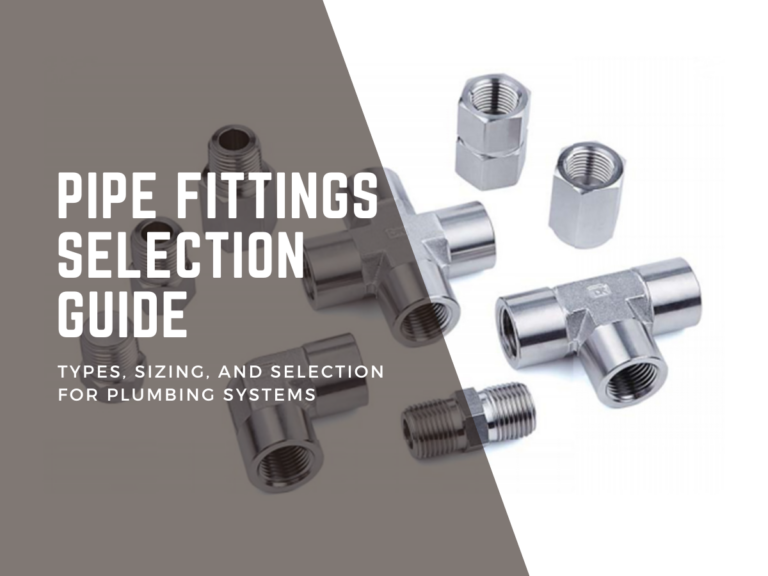
On the pipe side, the connection-system fundamentals are covered in our pipe fittings selection guide.
A common mistake on instrument hookups: someone tries to insert a piece of NPS 1/4 Schedule 40 pipe (0.540″ OD) into a 1/2″ DK-Lok compression body, finds it will not fit, and reports “the fitting is faulty.”
The fitting is not faulty. The pipe was the wrong product for the connection system.
The other common mistake: trying to butt-weld instrumentation tube into a process pipe header without an approved joint design. Unequal wall thickness requires suitable end preparation and a qualified welding procedure; it does not automatically make the weld unqualifiable.
Application Matrix: Which One Where
The application drives the choice. Once you know the function the line serves, the choice between tube and pipe is determined by the connection system, the bend requirement, and the inspection regime.
| Application | Tube or Pipe | Why |
|---|---|---|
| Instrument hookup to transmitter | Tube | Small bore, formable, compression-fitted, vibration-tolerant |
| Impulse line to manifold | Tube | Bend to fit the bridge, no welding at the instrument |
| Sample line to analyser | Tube | Internal surface finish controls carryover |
| Hydraulic actuator supply | Tube | High-pressure compression fittings, no thread sealant |
| Main process flow | Pipe | Large bore, flanged, butt-welded, inspectable per line class |
| Utility distribution (steam, water, air headers) | Pipe | NPS sizing, schedule selection per pressure-temperature class |
| Drain and vent | Pipe | Standard pipe schedule, threaded or socket-welded |
The DK-Lok Instrumentation Tubing Case
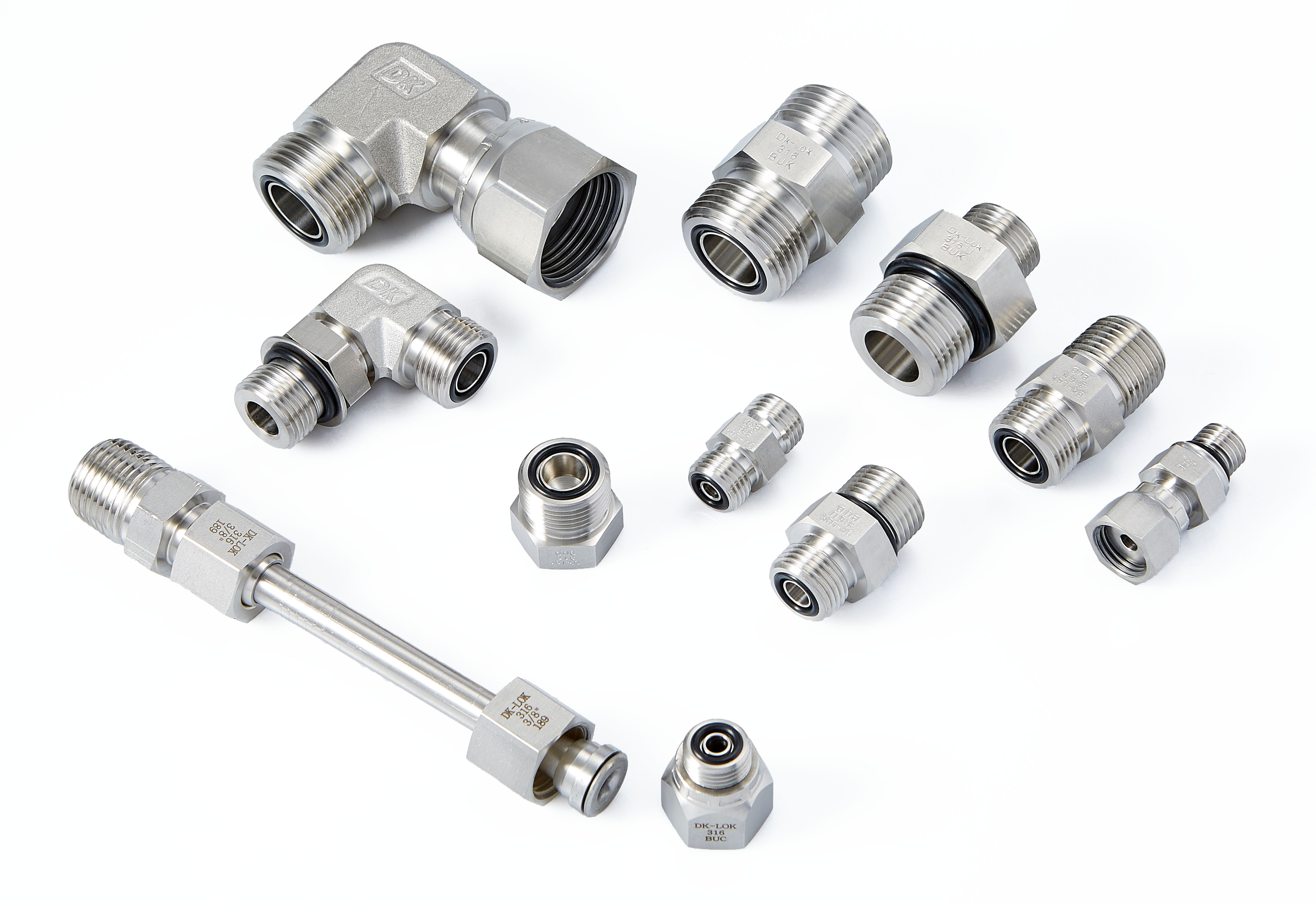
For instrumentation tubing service, DK-Lok 316L twin-ferrule fittings are the bench reference for impulse lines, sample lines, and instrument hookups in Malaysian O&G facilities.
DK-Lok 316L tube and fittings ship from the Simlecco Selangor warehouse with Mill Test Reports. Confirm the documentation required by the applicable code and DOSH approval; the 2022 Amendment Act does not prescribe a universal MTR requirement.
Simlecco is the authorised DK-Lok distributor in Malaysia — see why choose DK-Lok for the technical and documentation case. For background on the tube-fitting system that drives the instrumentation side of the spec, see what are tube fittings.
Common Mistakes That Show Up in the Field
- Specifying pipe schedule for an instrument tap. The instrument vendor expects a 1/2″ OD tube stub at the manifold. The contractor supplies NPS 1/2 Schedule 80 pipe. The hookup cannot be assembled without rework.
- Using tube fittings on pipe-grade tubing. Generic “tubing” from a hardware supplier may meet a different OD tolerance class than instrumentation A269 tube. The ferrule bite is unreliable on a tube that is out-of-round or oversize.
- Mixing material grades across a hookup. Carbon steel tubing on a stainless manifold produces a galvanic pair that fails fast in chloride-laden offshore air.
- Welding tube to pipe without an approved joint design. Unequal wall thickness requires suitable end preparation and welding qualification per ASME B31.3:2024.
A 1-inch OD tube measures 25.4 mm, while NPS 1 pipe has a nominal OD of 33.4 mm. Check actual outside diameters against the fitting specification before ordering.
Decision Checklist: Tube or Pipe
- Is the line carrying signal pressure to an instrument, sampling fluid to an analyser, or actuating a small hydraulic device? Use tube.
- Is the line carrying main process flow, utility distribution, or anything that needs flange-class containment? Use pipe.
- Does the connection system call out a ferrule, a flare, or an OD-based compression fitting? Use tube.
- Does the connection system call out a flange, butt-weld, socket-weld, or NPT thread? Use pipe.
- Is the run small bore, formable in the field, and routed around obstructions? Use tube.
- Is the run large bore, inspectable per ASME B31.3:2024, and supported on pipe racks? Use pipe.
Pressure-Temperature Envelope: How the Two Are Rated
Instrumentation tube pressure rating is a function of OD, wall thickness, material allowable stress, and a derating factor for temperature.
Manufacturer pressure-rating tables for 316L instrumentation tubing per ASTM A269/A269M-25 give the working pressure at ambient and a derating curve up to the alloy’s maximum service temperature.
Manufacturer tubing-data tables (including DK-Lok TS-05-S) must be checked for the exact size and grade; published data include a 3,700 psig rating for 1/2 in. OD × 0.049 in. wall fully-annealed 316/316L tubing.
Do not use 5,100–6,225 psig as a generic rating for that tube size. Always verify the specific value against the supplier’s published table for the project’s design-factor convention.
Process pipe pressure rating is set by the line class, which combines material spec, schedule, and flange class per ASME B16.5:2025.
A Class 150 flanged 316L line at 38 deg C carries a different allowable pressure than the same line at 400 deg C. The line class document for the project pins the schedule and the flange rating against the design pressure-temperature envelope.
Published estimates indicate Class 300 covers the majority of mid-pressure refining service; Class 600 and above appear on high-pressure utility and steam headers.
The practical consequence: a 1/2″ tube at 5,000 psig is routine instrumentation hardware. NPS 1/2 pipe at 5,000 psig requires pipe and connections rated for that pressure at the design temperature, plus testing per the line class; Class 1500 flanges are not generally sufficient.
The two product forms occupy different pressure-temperature regimes for different reasons.
Inspection and Traceability
Both tube and pipe carry traceability requirements when destined for DOSH-regulated service.
Instrumentation tube ships with a Mill Test Report to the ordered edition of ASTM A269/A269M or A213/A213M stating heat code, chemistry, mechanical properties, and the spec the material was produced to. Process pipe ships with a Mill Test Report per ASTM A312 or A106 with the equivalent data set.
For plant covered by the Occupational Safety and Health (Plant Requiring Certificate of Fitness) Regulations 2024, employers must retain the required design, construction, installation and inspection records. Material traceability requirements follow the applicable code and approval conditions.
A missing MTR must be assessed against the applicable code and approval requirements to determine the necessary corrective action.
Frequently Asked Questions
Can I use pipe in a compression fitting?
No. Pipe OD does not match tube OD for the same nominal size, and the surface finish is not controlled to the tolerance the ferrule needs.
The ferrule bite will be unreliable and the joint will leak under vibration. Use the OD-matched tube specified by the fitting manufacturer.
Is 316L tube the same as 316L pipe?
Same alloy, different product form. Tube is produced to ASTM A269/A269M-25 or A213/A213M-25 with instrumentation OD and surface finish control.
Pipe is produced to ASTM A312 with NPS-family OD control. For sour service, both forms require separate NACE MR0175:2021 qualification.
What standards govern tube-to-pipe transitions?
The transition piece itself is typically a bar-stock adapter (tube end on one side, NPT or socket-weld on the other). ASME B31.3:2024 requirements apply to both sides where they form part of the process piping system; follow the fitting manufacturer’s installation procedure as well.
Why does my fitter keep substituting pipe for tube?
Usually because the BOM did not differentiate clearly, the warehouse only stocks pipe, or the fitter is unfamiliar with instrumentation tubing supply.
The fix is at the procurement stage — call out OD and wall on tube items, NPS and schedule on pipe items, and qualify the supplier on both product forms.
Need help sourcing the right tube or pipe for your hookup?
Click the WhatsApp button on this page to speak with our technical team — or fill in the contact form and we will respond within one business day.
Disclaimer: All brand names mentioned are trademarks of their respective holders.