Is your reinforced industrial hose inventory adequately protected from corrosive chemicals? In industrial settings, these hoses must safely handle acids, solvents, and corrosive cleaning agents under extreme pressure and temperature. If a hose fails, the operational and financial risks are severe.
Industry estimates put chemical-spill incident costs in the high six-figure to seven-figure ringgit range when emergency response, regulatory penalties, and production loss are aggregated. Many hose failures stem from small problems that build up over time, such as internal chemical degradation, improper installation, or insufficient inspection — see our broader review of common hydraulic hose failures. For high-pressure chemical lines, preventing these small issues is vital to ensuring your hose inventory lasts longer.
Understanding The Chemical Environment and Material Risk
What makes chemical environments so challenging for reinforced hoses? Industrial sites in Malaysia frequently work with corrosive fluids like concentrated sulfuric acid, sodium hydroxide, and various alcohols, alongside industrial hoses for oil and gas service. Each substance presents specific risks that can cause rapid degradation of hose materials, especially under high pressure and heat.
Raised pressure, temperature, and chemical concentration greatly influence how fast degradation occurs. A fluid that seems non-reactive at ambient temperature can become highly corrosive when heated. Using a material unsuitable for the specific acid, concentration and temperature can cause premature failure. In contrast, PTFE-lined reinforced hoses and EPDM-based hoses are widely recognized for superior resistance across a broad range of industrial chemicals.
Critical Material Selection for Chemical Hoses
How do we match the hydraulic hose material to the specific chemical? The internal lining must suit the chemicals being run through it to prevent rapid degradation. This process is non-negotiable for safety and reliability, especially for high-pressure applications.
We recommend focusing on these high-performance materials for your industrial hose needs:
- PTFE (Polytetrafluoroethylene): This material is inert to most chemicals and solvents, maintaining integrity up to 260°C. It resists nearly all acids, alkalis, and solvents, making it ideal for aggressive fluids under extreme pressure. PTFE tubing is specified to ASTM D3295 (PTFE seamless tubing); confirm current edition against the order, alongside FDA compliance where food-contact service applies.
- EPDM (Ethylene Propylene Diene Monomer): Excellent for handling hot water, steam, mild acids, and alkalis. EPDM is often used for diluted sulfuric acid or caustic soda solutions; suitability up to 150°C and at the required pressure depends on the compound and manufacturer’s rating. EPDM rubber selection follows the ASTM D2000-18(2024)e1 classification system, which categorises elastomers by service properties (heat resistance, oil resistance, type, class, hardness, tensile strength). Specify the D2000 line callout (e.g. 4BA714) appropriate to the chemical service.
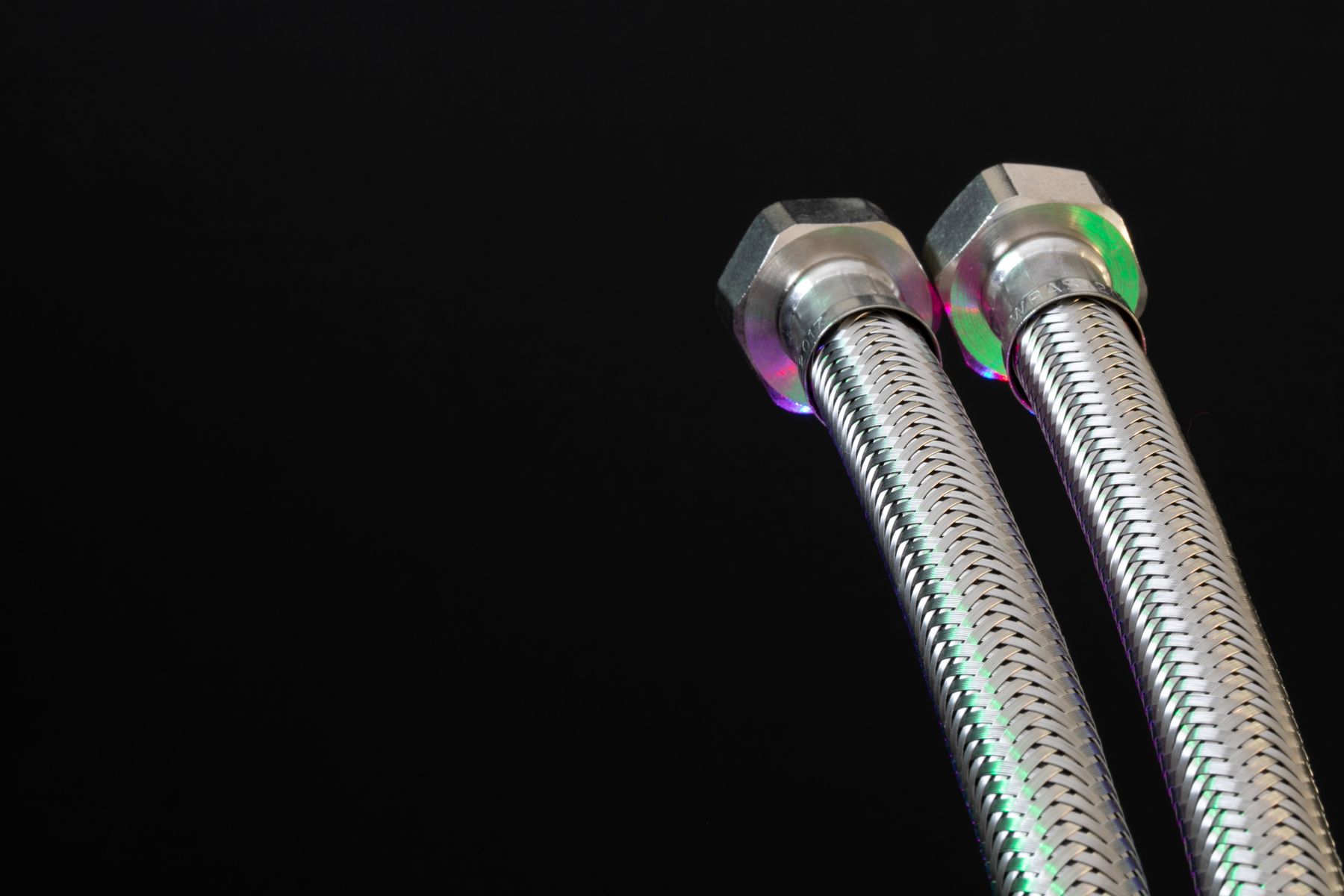
- 316/316L Stainless Steel Reinforcement: This metal is crucial for the hose braiding and external reinforcement. See our notes on preventing corrosion in stainless steel flexible hoses for compatible materials. It provides structural integrity, high pressure containment, and corrosion resistance—essential for end fittings in hydraulic hose assemblies.
When requesting an industrial hose, always specify the chemical concentration, temperature range, and maximum operating pressure.
Routine Maintenance and Safety Compliance
How should reinforced hoses be maintained to meet Malaysian safety standards? Even the most dependable reinforced hoses require regular inspection to support the employer’s safe-plant duty under section 15 of the Occupational Safety and Health Act 1994, as amended and to avoid unplanned shutdowns.
Recommended practices for managing hydraulic hose integrity include:
- Regular Inspection: Check the hose for cracks, swelling, or stiffness at intervals based on the manufacturer’s guidance and the application’s risk. Stiffness can indicate chemical attack beneath the surface where pressure is being contained.
- Clamp & Connector Checks: Examine hose clamps and coupling points for corrosion or looseness. This is a common failure point where pressure integrity is lost and leaks begin.
- Tracking & Logging: Tag hoses with serial numbers to track installation dates and inspection history. Proactive replacement before a hose reaches its service limit prevents catastrophic high pressure failures.
- Proper Storage: Drain hoses completely after use. Store them coiled on racks in a cool, dry area, away from direct sunlight.
Replace any hose showing wear immediately. Proactive replacement is always cheaper and safer than reactive cleanup.
Proper Installation and Handling Techniques
A hose’s longevity depends greatly on how it is installed and handled. A strong hydraulic hose installed poorly will still fail quickly. Tight bends, twists, improper fittings, and lack of support are common mistakes that can cut the life of even high-quality hoses.
- Avoid Tight Bends: Follow the manufacturer’s specified minimum bend radius. This is critical for high pressure lines to prevent structural damage.
- Use Matched Fittings: Use compatible flange fittings or ends to ensure proper alignment and sealing. This prevents uneven stress distribution under pressure.
- Allow Slack: Leave a slight slack between fixed points to accommodate pressure or thermal expansion.
- Add Support: Use support brackets or clips for long hose runs to limit sagging and minimize vibration.
Never drag an industrial hose across rough floors. Installation training for maintenance teams can dramatically reduce unplanned hydraulic hose failures and protect the system’s ability to maintain maximum pressure.
Partnering With A Reliable Supplier (EEAT Focus)
How does the right partner ensure safety in chemical applications? The right supplier is your first line of defense against chemical hose failure. We understand the high-stakes reality of handling corrosive media and working with high pressure systems.
As Malaysia’s authorized DK-Lok distributor, Simlecco provides certified hose assemblies, compression fittings, and valve systems engineered for chemical compatibility and operational safety. Our team consults based on real application data, ensuring all recommendations meet relevant ASTM (e.g. A269/A269M-25 instrumentation tubing, A312/A312M-25 welded and seamless austenitic SS pipe), ASTM D2000-18(2024)e1 elastomer classification, and ASTM D3295 PTFE tubing standards as applicable to the hose construction. This commitment guarantees performance, traceability, and compliance—key to maintaining safety in high-risk industrial environments.
Keeping Your Reinforced Hoses At Peak Performance
In any chemical setting, reinforced hoses are critical safety components. Extending their service life depends on proper material selection, installation, inspection, and supplier partnership. Consistent maintenance, data-driven material choices, and trained handling practices reduce downtime, prevent leaks, and ensure worker safety.
To upgrade your chemical hose systems for performance and compliance, contact Simlecco for technical consultation or to request a quote on reinforced hose solutions specified for your chemical service.
With Simlecco as your partner, you gain access to reliable, certified fluid system components built for reliability, safety, and the unique chemical challenges of Malaysia’s industries.
Related Simlecco guides: low flow problems in industrial pipe hoses.