- Pick the Right Fitting and the Leak Never Starts
- What Most Articles Get Wrong About Choosing Fittings
- The Four Choices That Stop a Leak
- 1. Connection type: match it to how often the joint moves
- 2. Thread standard: the mismatch that fails under vibration
- 3. Tube OD and material: the push-to-connect seals on the skin
- 4. Body material: brass by default, stainless when it's wet
- What Malaysian Plants Need to Know
- Frequently Asked Questions
- 1-Minute Pneumatic Fitting Selection Checklist
Choose a pneumatic fitting by matching four things to the line: connection type (push-to-connect, compression, barb, or threaded), port thread standard, tube outside diameter and material, and body material for the environment. Get the thread standard wrong, and it leaks under vibration, no matter how tight it feels.
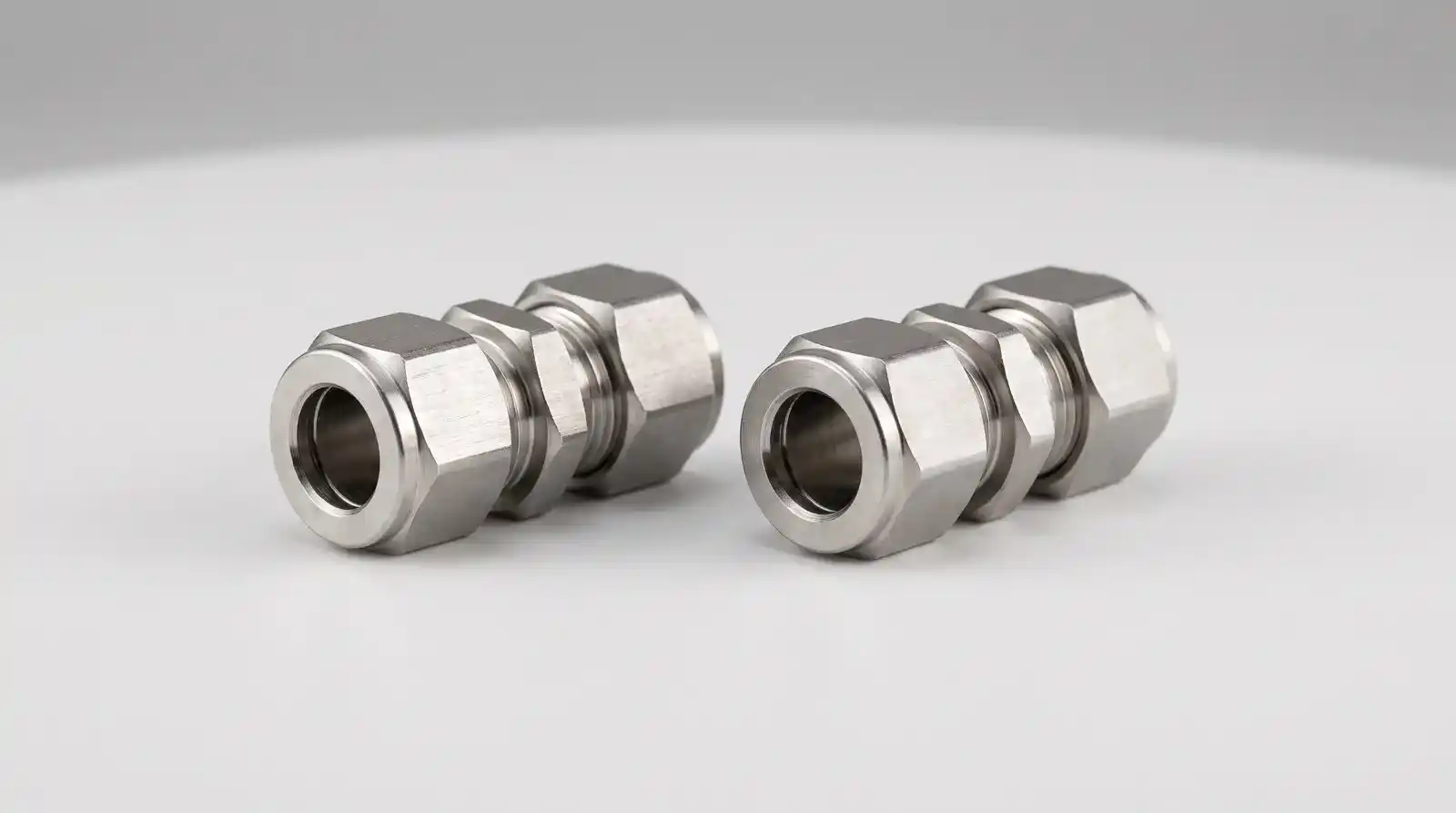
Pick the Right Fitting and the Leak Never Starts
Choosing a pneumatic fitting comes down to matching four things to the line: the connection type, the port’s thread standard, the tube’s outside diameter (OD) and material, and the body material for the environment. Think of a push-to-connect fitting as a finger trap for tube: push the tube in, and a ring of steel teeth lets it slide one way but grips the instant it tries to pull back, while an O-ring seals against the tube’s outer skin. That is why a scratched or out-of-round tube leaks even when the fitting is “connected.”
Get the thread standard wrong, and the fitting feels tight after two or three turns, then leaks the moment the line sees vibration or a pressure spike, because NPT and BSP threads are cut at different angles and never seal together. If you pick replacement fittings off the shelf, work through these four choices in order, and you’ll stop the leak before it starts. This guide is the selection companion to fixing leaks that have already started.
What Most Articles Get Wrong About Choosing Fittings
Most guides treat fitting choice as an afterthought: a size and a shape. Practitioners know it is where the reliability is won or lost. Fitting selection needs attention early in the design cycle. On a Malaysian plant floor, the same shortcut shows up as a drawer of mixed fittings and a leak that comes back every shutdown.
The real field problem the generic guides skip is thread standards. A plant running American, European, and Chinese equipment has NPT, BSP, and metric ports on the same manifold. Use an adapter with the correct thread standard on each side. This guide puts that choice first.
The Four Choices That Stop a Leak
1. Connection type: match it to how often the joint moves
Four connection types cover almost every pneumatic line, and each seals differently.
| Connection type | How it seals | Typical pressure | Reworkable? | Best for |
|---|---|---|---|---|
| Push-to-connect (one-touch) | Collet teeth grip tube OD; O-ring seals on the OD | Around 1.0 MPa (10 bar) standard | Yes, repeatedly | Fast connect/disconnect on control air |
| Compression | Nut and ferrule swage onto the tube | Limited by the lowest-rated fitting or tube component | Yes, following the manufacturer’s reassembly instructions | Higher-integrity control and instrument lines |
| Barb / hose-tail | Tube stretched over a barb, held by a clamp | Low, below ~125–150 psi | No (usually cut to remove) | Soft hose, drains, low-duty air |
| Threaded (NPT/BSP) | Thread wedge (taper) or a face seal (parallel) | Manufacturer’s pressure–temperature rating | Yes | Permanent port connections to valves and cylinders |
Push-to-connect is the shop default for speed. Choose compression when vibration or line integrity matters; it works on the same grip-and-seal principle as a tube fitting. Barb fittings are cheap but low-pressure. Check the hose and fitting manufacturer’s pressure limits. Threaded connections are the structural backbone, and their whole reliability rides on the next choice.
2. Thread standard: the mismatch that fails under vibration
This causes the most callbacks. NPT (National Pipe Taper) uses a 60° thread angle and is tapered, so it seals metal-to-metal on the threads and requires a thread sealant. BSPT (British Standard Pipe Taper) uses a 55° Whitworth profile, also tapered but at a different angle. BSPP (British Standard Pipe Parallel) and metric parallel threads do not taper at all; the thread only holds the fitting, and the seal is made separately on a face by a bonded washer or O-ring.
Mix a 60° NPT with a 55° BSP, and they bite for a couple of turns, feel tight, and never form a continuous seal. Forcing them can gall or crack the female port. The fix is a purpose-made adapter with the correct standard on each side. Two field rules save the most grief: taper threads (NPT, BSPT) seal on the threads and take sealant; parallel threads (BSPP, metric) seal on a face, so PTFE tape on them does nothing useful and only sheds debris into valves.
The pneumatic port standard makes the incompatibility explicit. ISO 16030:2022, the standard for pneumatic connection ports, states plainly that its parallel-thread ports “are not intended to connect with… threads that conform to ISO 7-1” (the BSP taper standard). The reference standard for NPT itself is ANSI/ASME B1.20.1. When in doubt, gauge or identify the thread before you fit it; do not judge it by feel.
3. Tube OD and material: the push-to-connect seals on the skin
A push-to-connect fitting seals on the tube’s outside diameter, so the tube’s condition affects the seal. Cut it square, keep it round, and push it fully home. Incomplete insertion or an incorrect tube OD can compromise the seal.
Match the fitting to the tube material too: polyurethane (PU) for flexible drops, nylon (PA) for higher pressure and heat, polyethene (PE) for light service. Match the exact OD as well, in inches or metric. A 1/4-inch tube is not a 6 mm tube, and tubes are sized differently from pipes. Forcing the near-miss is a slow leak waiting for the next hot afternoon.
4. Body material: brass by default, stainless when it’s wet
Brass is the default for plant compressed air. Check the fitting’s compatibility with the air quality and operating environment. Its weakness matters in Malaysia: in humid, coastal, salt-laden air, brass can suffer dezincification (zinc leaching out of the alloy), which hollows out its strength over time.
That is the trigger to move to 316 stainless steel. For washdown areas, coastal and marine air, and corrosive atmospheres, its corrosion resistance is built into the metal rather than a plating that wears through. Polymer (acetal) fittings have their place for light-duty, chemically mild, low-pressure service. In a coastal plant, matching the metal to the air is the difference between a fitting that lasts years and one you replace every audit.
Note for Procurement: When the floor asks for “the same fitting again,” the specification that matters on the PO is the thread standard, the exact tube OD, and the body material: brass for dry interior air, 316 for washdown and coastal duty. Sourcing the correct fitting from a supplier who stocks the right standard is cheaper than a recurring leak.
What Malaysian Plants Need to Know
Compressed air looks forgiving until you cost a leak. A plant floor in Shah Alam runs mixed-origin equipment, so the manifold carries NPT, BSP, and metric ports side by side. The reliable fix is a correctly specified adapter, not a forced thread. On coastal and washdown lines, the material choice moves from brass to 316 for the same reason corrosion drives every other selection on site.
Provenance still matters at the low end. Grey-market fittings mix thread tolerances and thin the brass, so “the same size” from an unverified source can gall a port or dezincify in a season. DK-Lok pneumatic and instrument fittings are supplied through Simlecco to manufacturer specifications, so the thread standard and material match the label.
Why the Right Fitting Matters on Air Systems:
A compressed-air leak is a permanent load on the compressor and a safety risk when a line lets go under pressure. Choosing the right connection type, thread standard, and material up front is the cheapest reliability you can buy.
Frequently Asked Questions
Push-to-connect, compression, or threaded: which do I use?
Push-to-connect for occasional disconnection of control air drops; use a suitable quick-disconnect coupling for frequent connection cycles. Compression where vibration or line integrity matters. Threaded for permanent port connections into valves and cylinders. Barb only for low-pressure soft hose, below roughly 125–150 psi.
How do I tell an NPT thread from a BSP thread?
They are cut to different angles: NPT at 60° and BSP at 55°, so a thread gauge is the reliable check. If two tapered threads bind unexpectedly, stop and verify their standard, size and condition before fitting an adapter or replacement.
Brass or stainless for a humid Malaysian plant?
Brass for dry interior compressed air. Move to 316 stainless for washdown areas, coastal or marine air, and corrosive atmospheres, where brass can dezincify and plated fittings eventually corrode through.
Why does my push-to-connect fitting keep leaking?
Usually the tube isn’t pushed fully home, is cut at an angle, is scratched, or has the wrong OD. The fitting seals on the tube’s outside diameter, so a clean square cut and a full push are part of the seal.
1-Minute Pneumatic Fitting Selection Checklist
- Identify the port thread standard (NPT / BSPT / BSPP / metric) before you pick a fitting.
- Match the connection type to how often you break the joint: push-to-connect, compression, barb, or threaded.
- Confirm the exact tube OD in inches or metric; never force a near-miss.
- Match the tube material (PU / nylon / PE) to pressure and temperature.
- Choose brass for dry interior air, 316 stainless for washdown and coastal duty.
- Check the fitting and tube pressure–temperature ratings; apply any derating specified by their manufacturers.
- Never force two mismatched threads; fit the correct adapter, and keep tape off parallel threads.
Once the right fittings are in service, know the warning signs a compression fitting is about to fail so you catch a weeping joint before it lets go.
Need help matching pneumatic fittings to your lines?
Click the WhatsApp button on this page, or fill in the contact form and we’ll respond within one business day.
Disclaimer: All brand names mentioned are trademarks of their respective holders.