- Instrument Fittings vs General Pipe Fittings
- The Four Main Families of Instrument Fittings
- 1. Tube Fittings
- 2. Instrument Valves
- 3. Instrument Manifolds
- 4. Sample-Line and Specialty Components
- Materials: SS316L Baseline and the Sour-Service Question
- Pressure Ratings: What 6,000 psig Means in Practice
- End Connections: Twin-Ferrule, NPT, BSPP, Weld
- The DK-Lok Family at a Glance
- Application Matrix
- Sourcing Checklist
- Frequently Asked Questions
- What is the difference between instrument fittings and pipe fittings?
- Is SS316L sufficient for sour service?
- Can I mix DK-Lok fittings with another brand's ferrules?
- Talk to Simlecco
An instrument fitting is a small-bore, high-pressure mechanical connector used to join instrumentation tubing to process equipment without breaking containment. Think of it as the last mile of the process — the few centimetres of mechanical connection that determine whether your transmitter reads true or your sample analyser drifts. Instrument fittings sit on the impulse line between a process tap and a transmitter, on the sample loop to an analyser, or on the chemical injection line to a process header.
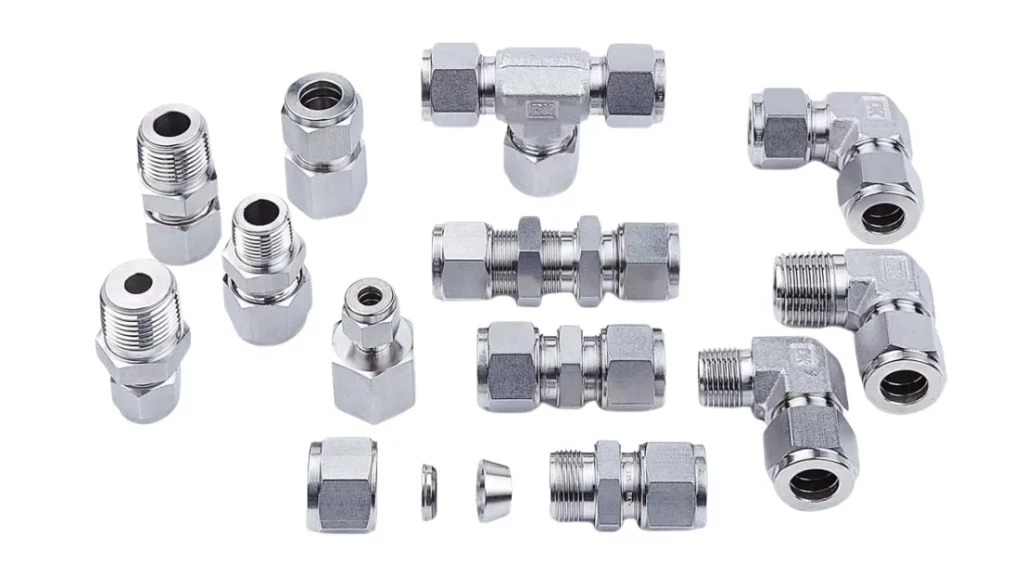
Instrument fittings are not the same as general-purpose pipe fittings: they run at tighter dimensional tolerances, carry higher pressure ratings per unit size (commonly 6,000 psig in SS316L, up to 60,000 psig in high-pressure series), and seal through a metal-to-metal twin-ferrule mechanism rather than thread sealant or elastomer.
In Malaysian process industries — upstream oil and gas, petrochemical, and semiconductor fabrication — the instrument fitting is the component that determines whether a hookup holds for the design life or weeps on startup.
If you are new to instrumentation hookups or scoping components for a Malaysian project, this article walks you through what an instrument fitting is, the four main families, the materials and ratings that matter, and how to specify one against your service conditions.
Instrument Fittings vs General Pipe Fittings
A general-purpose pipe fitting — an NPT elbow, a screwed union, a flanged tee — joins pipe in process service where the leak path is sealed by thread tape, anti-galling compound, or a bolted flange gasket.
An instrument fitting joins tubing, which is dimensionally tighter than pipe and runs at smaller bore. Tubing is specified by outside diameter and wall thickness rather than by nominal pipe size.
The instrument fitting grips the tube wall through twin ferrules and seals against the fitting body cone. There is no thread sealant in the joint and no elastomer on the seal path.
The difference matters operationally. A general pipe joint can be re-tightened to chase a weep. An instrument fitting is rotation-counted at installation — 1-1/4 turns past finger-tight for 1/4-inch through 1-inch — and over-rotation deforms the ferrule beyond its elastic limit.
Once a ferrule is bitten, it is bitten on that tube only, and reuse on a different tube end is a leading cause of startup weeps. See twin-ferrule compression fitting installation for the rotation discipline.
The Four Main Families of Instrument Fittings
An instrumentation hookup is built from four functional families: tube fittings, instrument valves, instrument manifolds, and sample-line components. Each family does one job in the signal path between process and instrument.
1. Tube Fittings
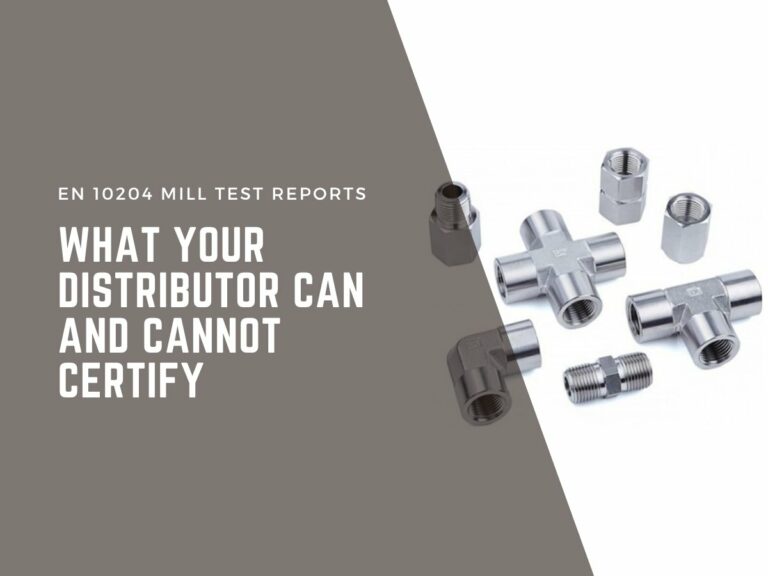
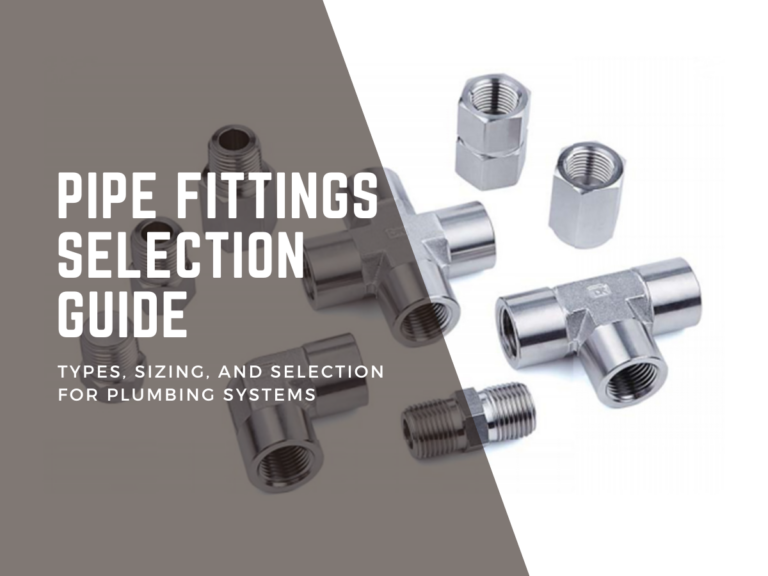
Tube fittings are the connectors — straights, elbows, tees, crosses, reducers, and bulkheads — that route the tubing run.
Twin-ferrule designs (the DK-Lok pattern is the reference) dominate Malaysian instrumentation because they hold rated pressure on vibrating bridges, take installation rework better than single-ferrule or flared designs, and align cleanly with ISO 8434-1:2007 metric tubing where the project specifies metric. See what are tube fittings for the deeper selection guide.
2. Instrument Valves
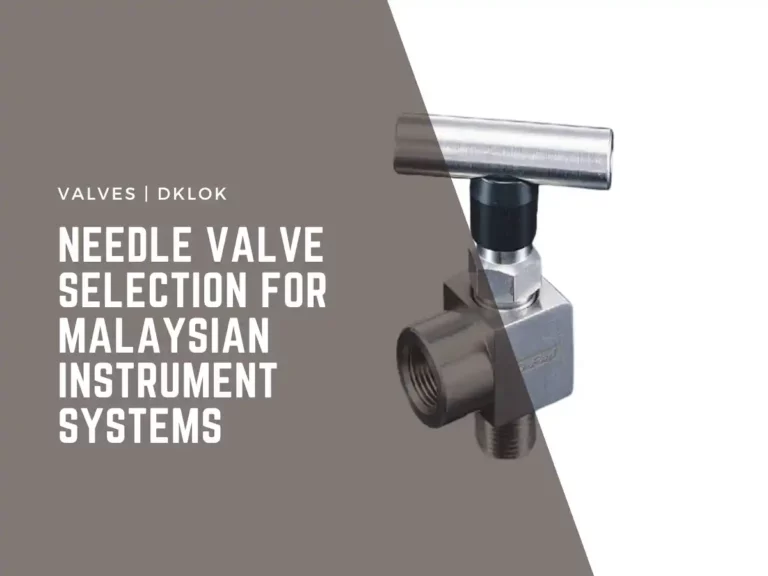
Instrument valves — ball valves, needle valves, check valves — isolate or throttle the impulse signal. A 2-way ball valve provides on/off isolation at a transmitter root. A 3-way ball valve adds a vent or a calibration tee.
A needle valve gives the fine throttling required at sample stations or pressure gauges. All are pressure-tested per API 598:2023 for shell and seat integrity before they ship.
3. Instrument Manifolds
An instrument manifold consolidates isolation, equalisation, and vent functions for a differential pressure transmitter into a single forged block.
A 2-valve manifold suits a single-port pressure transmitter. A 3-valve manifold serves a DP transmitter with isolation and equalisation. A 5-valve manifold adds two vent or test taps so the line can be depressurised and calibrated without removing the transmitter from the bridge.
See 3-valve vs 5-valve instrument manifold differences for the selection rationale.
4. Sample-Line and Specialty Components
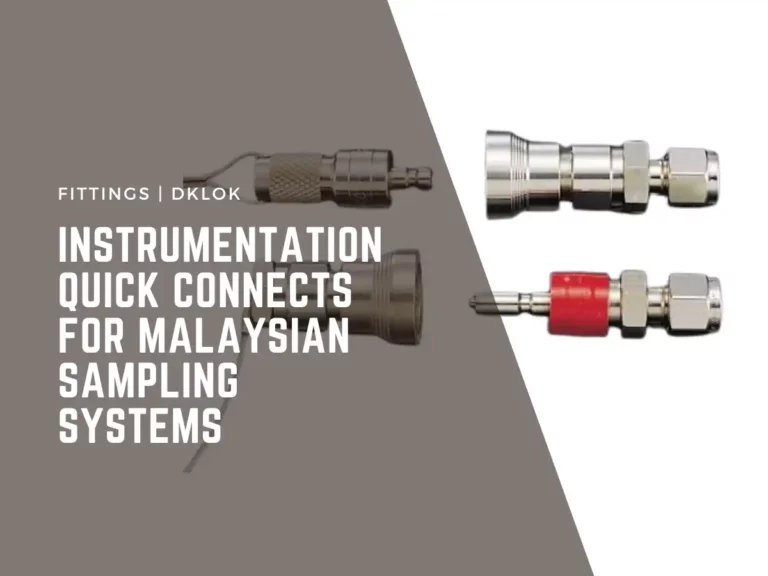
Sample-line components include quick connects for analyser take-offs, snubbers for pulsation damping on reciprocating compressor lines, gauge isolators, and the small-bore relief valves used on chemical injection skids. They are the supporting cast that completes an instrumentation hookup once the main signal path is built.
Materials: SS316L Baseline and the Sour-Service Question
SS316L is the default material for Malaysian instrumentation hookups. The bar stock used for fitting bodies and valve bodies is supplied to ASTM A276:2017, and SS316L delivers corrosion resistance against most produced waters, condensates, and atmospheric service in coastal Malaysian climates.
For sour service — lines that carry hydrogen sulphide above the partial pressure threshold defined by the standard — the components must additionally comply with NACE MR0175:2021, which constrains hardness and forbids heat treatments that promote sulphide stress cracking.
Where SS316L is insufficient for the chemistry, the alternatives are Monel 400 for hydrofluoric service, Hastelloy C-276 for aggressive acids, or higher-nickel super-duplex grades.
The NACE-versus-standard-316L question is itself a recurring debate on engineering forums. An Eng-Tips discussion on determining the H2S threshold for NACE piping covers the partial-pressure rule, the wetted-versus-non-wetted parts distinction, and the project owner’s responsibility to declare sour service at the line list stage — useful background when a vendor questions whether NACE certification applies to a surface instrument tube fitting.
| Material | Typical Service | Standard Reference |
|---|---|---|
| SS316L | General instrumentation, hydrocarbon, steam, coastal atmosphere | ASTM A276:2017 |
| SS316L NACE-certified | Sour service (H2S above NACE thresholds) | NACE MR0175:2021 |
| Monel 400 | Hydrofluoric acid, certain seawater service | ASTM B164 |
| Hastelloy C-276 | Aggressive acid, chlorinated solvent | ASTM B574 |
| Brass | Compressed air, low-pressure instrumentation only | ASTM B16 |
Pressure Ratings: What 6,000 psig Means in Practice
An SS316L twin-ferrule tube fitting in 1/4-inch through 1-inch is rated to 6,000 psig at ambient working temperature. That is the manufacturer’s design pressure derived from burst testing with the rated tube wall, derated by the standard’s safety factor.
For high-pressure hydraulic and test-rig work, the DK-Lok HP series carries fittings rated to 60,000 psig in selected sizes.
Above the rated pressure, the fitting is no longer in design envelope, and the failure mode is ferrule extrusion or tube blow-out at the joint. The rated MAWP is the upper bound, not a target.
Temperature derates the pressure rating. The manufacturer publishes a derating curve by material grade. Verify the temperature derate at design temperature, not at ambient, before signing off the BOM.
End Connections: Twin-Ferrule, NPT, BSPP, Weld
An instrument fitting carries a tube end on one side and a process end on the other. The tube end is twin-ferrule in DK-Lok’s standard line. The process end varies by application:
- NPT (National Pipe Taper): the dominant process end in upstream oil and gas. Threaded into a process tap or a transmitter block.
- BSPP (British Standard Pipe Parallel): common where European equipment is in service. Sealed by a bonded washer, not by thread engagement.
- ISO 8434-1:2007 metric: specified on European EPC scopes, German-licensed plant, and some semiconductor lines.
- Socket weld and butt weld: for hookups that integrate into a welded process line, no demountable joint required.
The DK-Lok Family at a Glance
DK-Lok manufactures instrument fittings across the full hookup. The standard SS316L twin-ferrule range covers tube fittings from 1/16-inch through 2-inch — see the DK-Lok product catalog for CAD drawings and dimensional data across the family.
Valves include ball, needle, plug, and check designs. Manifolds run 2V, 3V, and 5V variants. HP-series fittings carry the 60,000 psig rating.
Simlecco is the authorised DK-Lok distributor in Malaysia and stocks the high-runners locally against forecast — see why DK-Lok is the preferred brand for the technical, documentation, and procurement case. For a wider view of the DK-Lok product mix in oil and gas service, see oil and gas instrumentation fittings in Malaysia.
Application Matrix
| Application | Typical Fitting Selection |
|---|---|
| Pressure transmitter hookup | 2V manifold, NPT process end, SS316L twin-ferrule on tube side |
| DP transmitter on orifice plate | 5V manifold, SS316L, NACE if sour |
| Sample station to GC analyser | Quick connects, needle valve, snubber, SS316L |
| Chemical injection line | Check valve, needle valve, Hastelloy if aggressive chemistry |
| High-pressure test rig | HP series, 60,000 psig rated, NPT or coned-and-threaded ends |
| Data centre liquid cooling loop | SS316L twin-ferrule, ISO 8434-1:2007 metric ends common |
Sourcing Checklist
- Service medium, design pressure, design temperature, and sour-service requirement
- Tube OD and wall thickness, plus the tubing standard (ASTM A269:2022 or ASTM A213:2023)
- Process-end thread or weld preparation
- Material grade, with NACE MR0175:2021 certificate flag if sour
- Mill test report against heat code — mandatory on every shipment
- API 598:2023 test record for any valve in the order
Frequently Asked Questions
What is the difference between instrument fittings and pipe fittings?
Instrument fittings join tubing at small bore using metal-to-metal twin-ferrule seals and run at higher pressure ratings per unit size. Pipe fittings join pipe at larger bore and seal through thread sealant or a gasketed flange. The two are not interchangeable.
Is SS316L sufficient for sour service?
Only if the SS316L is certified to NACE MR0175:2021 — the standard sets hardness limits and heat-treatment constraints that ordinary SS316L stock will not necessarily meet. Specify NACE certification at order time.
Can I mix DK-Lok fittings with another brand’s ferrules?
No. Ferrule and body geometries differ between manufacturers. Mixing brands within a joint invalidates the pressure rating and is a common root cause of startup weeps. Replace a DK-Lok joint with a DK-Lok component.
Related Simlecco guides: solving air leaks in pneumatic fitting systems.
Talk to Simlecco
Instrument fitting selection sits at the intersection of process design, material engineering, and procurement.
If you are scoping a hookup for a new project or replacing fittings on an existing unit, contact Simlecco Sdn Bhd at simlecco.com.my for the DK-Lok bill of materials against your service conditions. SS316L is held in Selangor stock and NACE-certified product ships against documented heat codes.